Every year, at least 2.8 million Americans get an antibiotic-resistant infection, and more than 35,000 die as a result. Antibiotic resistance occurs when bacteria and other microbes develop the ability to survive exposure to antibiotics. Some of the most concerning antibiotic-resistant bacteria — such as methicillin-resistant Staphylococcus aureus (MRSA), which can cause serious skin infections, and carbapenem-resistant Enterobacteriaceae (CRE), which can cause severe pneumonia and urinary tract infections — have become so resistant that they are virtually untreatable with conventional antibiotics.
“Antibiotic resistance is one of the most serious threats to global public health,” said Argonne physicist Vitali Prakapenka. “Our findings provide new hope for the development of more effective antibiotics.”
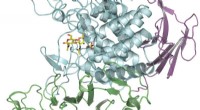
The researchers used an X-ray technique called serial femtosecond crystallography, or SFX, to capture snapshots of an enzyme, known as beta-lactamase, in the act of destroying an antibiotic. SFX is uniquely suited to capture atomic-level images of molecules in action.
“We caught the enzyme in mid-reaction, which enabled us to identify crucial steps in the process of antibiotic destruction,” said Prakapenka, who led the research team with scientists at Argonne’s Center for Nanoscale Materials, a DOE Office of Science User Facility. “We discovered that the antibiotic could actually get stuck in the enzyme’s active site, creating a kind of molecular traffic jam and halting the destructive process.”
With this new knowledge, the researchers believe it may be possible to develop antibiotics that are specifically designed to get stuck in the enzyme’s active site, thereby blocking the destruction of the antibiotic and killing the bacteria.
The research team is now working to develop new antibiotics based on their findings. They are also studying other antibiotic-resistant enzymes to identify additional vulnerabilities that could be exploited to develop new antibiotics.
“Our hope is that our research will lead to the development of new antibiotics that can overcome resistance and save lives,” Prakapenka said.
The research was funded by the DOE Office of Science and the National Institutes of Health.