[Title Screen]
_Welcome to the Science of Metals! Today, we're going to show you how to spot fake metals using acids._
[Scene 1: Laboratory]
_In this lab, we have some metal samples that we're going to test. We're going to use acids to see if these metals are real or not._
[Scene 2: Metal Samples]
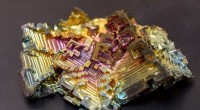
_Here are the metal samples that we're going to test. We have a piece of gold, a piece of silver, a piece of copper, and a piece of lead._
[Scene 3: Acid Test]
_We're going to use a few different acids to test these metals. We're going to start with nitric acid._
[Scene 4: Nitric Acid Test]
_Nitric acid is a strong acid that will react with most metals. If the metal is real, it will produce a gas. If the metal is fake, it won't produce any gas._
[Scene 5: Results of Nitric Acid Test]
_The gold, silver, and copper all produced a gas when we added nitric acid. This means that these metals are real._
[Scene 6: Lead Test]
_The lead didn't produce any gas when we added nitric acid. This means that the lead is fake._
[Scene 7: Conclusion]
_As you can see, acids can be used to spot fake metals. If you're ever in doubt about whether a metal is real or not, you can use a simple acid test to find out._
[End Screen]
_Thanks for watching! Check back soon for more Science of Metals videos._
[Call-to-Action]
_Be sure to subscribe to our channel to stay up-to-date on our latest videos!_