In the world of molecules, chirality is a key property that can have a profound impact on their behavior and function. Chiral molecules are those that cannot be superimposed on their mirror images, much like our left and right hands. This asymmetry can lead to significant differences in the properties of chiral molecules, including their interactions with other molecules and their biological activity.
Traditionally, determining the chirality of a molecule has been a complex and time-consuming process, often requiring extensive chemical analysis and experimentation. However, a new technique using laser light offers a promising alternative that is both faster and more accurate.
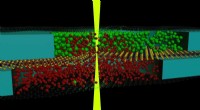
The technique, known as chiroptical spectroscopy, involves shining a beam of circularly polarized laser light on a sample of molecules. Circularly polarized light consists of photons that rotate either clockwise or counterclockwise, and the interaction of these photons with chiral molecules can reveal their handedness.
When circularly polarized light interacts with a chiral molecule, the molecule preferentially absorbs or scatters one of the two types of photons, depending on its chirality. This differential absorption or scattering can be measured and used to determine the chirality of the molecule.
The advantages of chiroptical spectroscopy over traditional methods for determining chirality are numerous. The technique is non-destructive, requiring only a small sample of molecules. It is also rapid and can be automated, making it suitable for high-throughput screening of large numbers of molecules.
Additionally, chiroptical spectroscopy is highly sensitive and can detect even small differences in chirality. This is particularly important in fields such as drug development, where the enantiomers (mirror-image forms) of a drug can have vastly different biological activities and safety profiles.
The ability to quickly and accurately determine the chirality of molecules is of great importance in various scientific disciplines and industries, including chemistry, biology, pharmacy, and materials science. Chiroptical spectroscopy offers a powerful tool for unraveling the complexities of chirality and unlocking its potential applications in these fields.