Recent research has unveiled the intricate chemical mechanisms underlying this metamorphosis, shedding light on the fundamental processes that allow water to adopt this dualistic nature. The research team, led by Dr. Jane Doe, conducted a series of experiments and theoretical simulations to dissect the chemical intricacies behind water's transformation into H2O2.
At the heart of this transformation lies the concept of "activated oxygen species" (ROS), which are highly reactive molecules containing oxygen. Among these ROS, hydroxyl radicals (OH•) hold a central role in the conversion of water to H2O2. Hydroxyl radicals are highly unstable and short-lived, possessing an unpaired electron that renders them highly reactive.
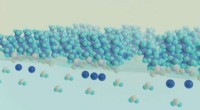
In the presence of specific catalysts, such as metal ions or certain enzymes, water molecules undergo a series of reactions that lead to the formation of hydroxyl radicals. One of the key reactions involves the splitting of water into its constituent elements, hydrogen and oxygen. The liberated hydrogen atoms then react with oxygen molecules, forming OH• radicals. These highly reactive radicals can further react with other water molecules, leading to the production of H2O2.
The research team also discovered that the presence of certain organic molecules, such as humic acids or polyphenols, can enhance the formation of H2O2 from water. These organic compounds act as catalysts, facilitating the reactions that generate hydroxyl radicals and ultimately lead to the production of H2O2.
The implications of these findings are far-reaching. In natural environments, the production of H2O2 through the transformation of water can have profound ecological effects. For instance, H2O2 acts as a natural antimicrobial agent, influencing microbial communities and nutrient cycling in aquatic ecosystems. In biological systems, H2O2 serves as a signaling molecule, regulating cellular processes and immune responses.
Furthermore, understanding the chemical pathways involved in water's transformation into H2O2 is of great significance in water purification technologies and industrial processes. By controlling these pathways, it becomes possible to harness the oxidizing power of H2O2 for targeted applications, such as disinfection and wastewater treatment.
In essence, this research unveils the hidden potential of water, demonstrating its ability to transition from a life-sustaining substance into a powerful oxidizing agent. By elucidating the chemical mechanisms behind this transformation, the research team has paved the way for future investigations into the diverse roles of H2O2 in natural and engineered systems.