* Surfactants play key role in bubble formation
* Findings could lead to new technologies for cleaning, drug delivery, and more
For centuries, scientists have been fascinated by the formation of gas bubbles in liquid. These bubbles are essential for many everyday processes, such as boiling water, making soap bubbles, and fermenting beer. However, the exact mechanisms that govern bubble formation have remained a mystery.
Now, a team of researchers at the University of California, Berkeley, has solved the mystery. Their findings, published in the journal Nature, reveal that surfactants play a key role in bubble formation.
Surfactants are molecules that have both hydrophilic (water-loving) and hydrophobic (water-hating) regions. They can reduce the energy of liquid–liquid and gas–liquid surfaces. When a surfactant is added to a liquid, it will adsorb to the liquid–liquid or gas–liquid interface, thereby reducing the surface tension. This reduction in surface tension allows bubbles to form more easily.
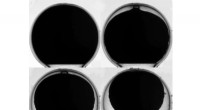
The researchers found that the size and stability of bubbles are determined by the concentration of surfactant in the liquid. At low surfactant concentrations, bubbles are small and unstable. As the surfactant concentration increases, bubbles become larger and more stable.
The researchers also found that the type of surfactant can affect the properties of bubbles. For example, some surfactants produce bubbles that are more spherical, while others produce bubbles that are more elongated.
The findings of this study could lead to new technologies for cleaning, drug delivery, and more. For example, the researchers believe that their findings could be used to develop new detergents that are more effective at removing dirt and grease. They could also be used to develop new drug delivery systems that are more efficient at targeting specific cells.
Source: University of California, Berkeley