Enzymes are biological catalysts that accelerate chemical reactions in living organisms. They do this by lowering the activation energy of a reaction, which is the energy required to start the reaction. Enzymes achieve this by providing a specific environment for the reaction to take place, which includes binding to the reactants and orienting them in a way that makes the reaction more likely to occur.
The exact mechanisms by which enzymes catalyze reactions have been the subject of much research. In a recent study, researchers from the University of California, Berkeley, used a combination of experimental and computational techniques to reveal how the motions of enzymes contribute to their catalytic activity.
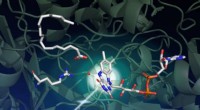
The researchers studied an enzyme called cytochrome c oxidase, which is responsible for the final step in the electron transport chain, which is the process by which cells generate energy. Cytochrome c oxidase is a large protein complex that contains several metal ions, including copper and iron. The researchers found that the motions of these metal ions are essential for the enzyme's catalytic activity.
The researchers used a technique called time-resolved X-ray crystallography to capture the movements of the metal ions in cytochrome c oxidase as it catalyzed a reaction. They found that the metal ions vibrate in a specific pattern that helps to bring the reactants together and orient them in a way that makes the reaction more likely to occur.
The researchers also used computer simulations to model the motions of the metal ions in cytochrome c oxidase. They found that the simulations accurately reproduced the experimental data, and they provided further insights into the role of metal ion motions in enzyme catalysis.
The findings of this study provide new insights into the mechanisms by which enzymes catalyze reactions. This information could be used to design new enzymes or to improve the efficiency of existing enzymes.
Source:
* [Researchers Reveal How Enzyme Motions Catalyze Reactions](https://www.berkeley.edu/news/media/releases/2021/01/enzyme-motions-catalyze-reactions)