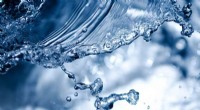
* High polarity: Water molecules are polar, meaning they have a slightly positive end and a slightly negative end. This polarity allows water to dissolve a wide variety of substances, including salts, sugars, and proteins.
* High surface tension: Water has a high surface tension, which means it can form droplets and hold its shape. This property is important for many biological processes, such as cell division and the transport of nutrients.
* High heat capacity: Water has a high heat capacity, which means it can absorb a lot of heat without changing its temperature very much. This property is important for regulating the temperature of organisms.
* Transparent to light: Water is transparent to light, which allows sunlight to penetrate deep into the water and support photosynthesis.
While water is an ideal solvent for life on Earth, there are other possible solvents that could support life. Some of these solvents include:
* Ammonia: Ammonia is a polar solvent that can dissolve a wide variety of substances. It also has a high heat capacity and is transparent to light. However, ammonia is toxic to most life forms on Earth.
* Methane: Methane is a nonpolar solvent that can dissolve a wide variety of substances. It also has a high heat capacity and is transparent to light. However, methane is flammable and can be explosive.
* Ethane: Ethane is a nonpolar solvent that can dissolve a wide variety of substances. It also has a high heat capacity and is transparent to light. However, ethane is not as volatile as methane and is more difficult to liquefy.
It is possible that life could exist on other planets or moons in our solar system or in other galaxies that use a solvent other than water. However, it is likely that such life would be very different from life on Earth.