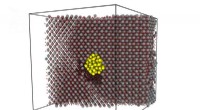
When a liquid and a gas meet, the gas molecules will begin to dissolve into the liquid. This process is called dissolution. The rate of dissolution will depend on several factors, including the temperature, pressure, and surface area of the liquid.
Temperature
The higher the temperature, the more gas molecules will dissolve into the liquid. This is because the higher the temperature, the more energy the gas molecules have, and the more likely they are to overcome the forces that hold them together.
Pressure
The higher the pressure, the more gas molecules will dissolve into the liquid. This is because the higher the pressure, the more gas molecules are forced into contact with the liquid, and the more likely they are to dissolve.
Surface area of the liquid
The greater the surface area of the liquid, the more gas molecules will dissolve into it. This is because the greater the surface area, the more gas molecules are in contact with the liquid, and the more likely they are to dissolve.
What are the effects of dissolution?
The dissolution of gas molecules into a liquid can have a number of effects, including:
* Reducing the surface tension of the liquid. This can cause the liquid to spread out more easily and to form bubbles.
* Changing the density of the liquid. This can cause the liquid to become more or less dense, depending on whether the gas molecules are heavier or lighter than the liquid molecules.
* Changing the viscosity of the liquid. This can make the liquid more or less viscous, depending on whether the gas molecules are larger or smaller than the liquid molecules.
* Changing the color of the liquid. This can happen if the gas molecules absorb or reflect light of a certain color.
Applications of dissolution
The dissolution of gas molecules into liquids has a number of important applications, including:
* Carbonated beverages. The carbon dioxide gas that gives carbonated beverages their fizzy taste is dissolved into the liquid under pressure.
* Scuba diving. Scuba divers use compressed air, which is a mixture of oxygen and nitrogen gases, to breathe underwater. The nitrogen gas is dissolved into the diver's blood, and is released when the diver surfaces.
* Firefighting. Firefighters use water to put out fires. The water absorbs heat from the fire, and the steam that is produced helps to smother the flames.
* Chemical reactions. Many chemical reactions take place in solution, where the reactants are dissolved in a liquid. This allows the reactants to come into contact with each other more easily, and speeds up the reaction.