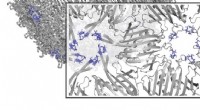
The nitrogenase enzyme complex consists of two metalloenzymes: the molybdenum-iron (MoFe) protein and the iron-sulfur (FeS) protein. The MoFe protein harbors the active site where N2 reduction occurs, while the FeS protein serves as an electron donor and ATP hydrolyzing unit.
Nitrogen Binding:
1. Substrate Access: The nitrogenase active site is deeply buried within the MoFe protein, creating a protective environment for the delicate N2 reduction process. A series of amino acid residues and a molybdenum cofactor (MoFe7S9C-homocitrate) form the "FeMo cofactor," which serves as the binding site for N2.
2. Weak Binding: Nitrogen binds reversibly to the FeMo cofactor through a "side-on" interaction, where the N-N triple bond is parallel to the FeMo cluster. This weak binding allows for the necessary mobility and activation of N2.
Nitrogen Reduction:
1. ATP Hydrolysis: The FeS protein hydrolyzes ATP to provide energy for the nitrogen reduction process. This hydrolysis generates a high-energy electron that is transferred to the MoFe protein.
2. Electron Transfer: The high-energy electron reduces a series of iron-sulfur clusters within the MoFe protein, ultimately delivering the electron to the FeMo cofactor.
3. Protonation and Reductive Cleavage: The reduced FeMo cofactor interacts with protons (H+) from the surrounding environment. These protons, along with the electrons, participate in a series of protonation-reduction steps that lead to the cleavage of the N-N triple bond. This process results in the formation of two NH3 molecules.
The nitrogenase mechanism involves multiple cycles of ATP hydrolysis, electron transfer, and protonation-reduction reactions. Each cycle brings N2 closer to complete reduction, eventually yielding two molecules of ammonia. The enzyme complex also undergoes a series of conformational changes during the catalytic cycle, which facilitate substrate binding, electron transfer, and product release.
Despite the significant progress made in understanding nitrogenase, there are still aspects of its mechanism that remain to be fully elucidated. Further research aims to provide a more detailed account of the intricate steps involved in nitrogen reduction and the regulation of nitrogenase activity, contributing to our understanding of this vital biological process.