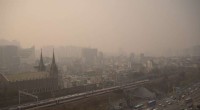
Train stations are often located in busy, urban areas, where air pollution can be a significant problem. This can be due to a number of factors, including:
* Traffic congestion: Train stations are often located near major roads and highways, where traffic congestion can lead to high levels of air pollution.
* Diesel exhaust: Diesel trains are a major source of air pollution, emitting a variety of harmful pollutants, including particulate matter, nitrogen dioxide, and sulfur dioxide.
* Other sources: Other sources of air pollution at train stations can include construction activities, idling vehicles, and cigarette smoke.
Health Effects of Air Pollution
Air pollution can have a number of adverse health effects, including:
* Respiratory problems: Air pollution can irritate the lungs and airways, leading to respiratory problems such as asthma, bronchitis, and pneumonia.
* Cardiovascular problems: Air pollution can increase the risk of heart disease, stroke, and other cardiovascular problems.
* Cancer: Air pollution has been linked to an increased risk of lung cancer and other types of cancer.
* Other health problems: Air pollution can also lead to a variety of other health problems, including headaches, fatigue, and nausea.
How to Improve Air Quality at Train Stations
There are a number of things that can be done to improve air quality at train stations, including:
* Reducing traffic congestion: Traffic congestion can be reduced by improving public transportation, encouraging walking and biking, and reducing the number of cars on the road.
* Electrifying trains: Electrifying trains can eliminate diesel exhaust emissions.
* Installing air filters: Air filters can be installed in train stations to remove particulate matter and other pollutants from the air.
* Encouraging smoke-free policies: Smoke-free policies can help to reduce the amount of secondhand smoke in train stations.
* Educating the public: The public can be educated about the health effects of air pollution and encouraged to take steps to reduce their exposure.
By taking these steps, we can improve air quality at train stations and protect public health.
Additional Resources
* [Environmental Protection Agency (EPA) - Air Quality at Train Stations](https://www.epa.gov/air-quality-transportation/air-quality-train-stations)
* [American Lung Association - Air Quality at Train Stations](https://www.lung.org/our-initiatives/healthy-air/outdoor/train-stations/)