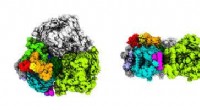
There are a few different ways that molecular motors can shift gears. One way is by changing the conformation of the motor protein. This can change the way the motor interacts with its track or the molecule it is pulling, and can cause the motor to move at a different speed or in a different direction.
Another way that molecular motors can shift gears is by changing the number of molecules that are pulling on the track or molecule. For example, if a motor is pulling on a molecule with two heads, it can move much faster than if it is only pulling with one head.
Finally, molecular motors can also shift gears by changing the angle at which they pull on the track or molecule. This can change the direction of movement or the speed of the motor.
The ability to shift gears is an important part of how molecular motors are able to perform their many different functions in cells. By being able to change their speed and direction of movement, molecular motors can play a vital role in a variety of cellular processes.
Here is a more detailed explanation of each of the three ways that molecular motors can shift gears:
1. Changing the conformation of the motor protein:
The conformation of a protein is the three-dimensional arrangement of its atoms. When a molecular motor changes conformation, it can change the way it interacts with its track or the molecule it is pulling. This can cause the motor to move at a different speed or in a different direction.
For example, the myosin motor protein has two heads that can bind to actin filaments. When the myosin head is in the extended conformation, it can bind to actin and pull on it. When the myosin head is in the folded conformation, it cannot bind to actin and does not pull on it. By changing the conformation of its heads, myosin can move along actin filaments at different speeds.
2. Changing the number of molecules that are pulling on the track or molecule:
If a molecular motor has multiple heads, it can pull on the track or molecule with more force than if it has only one head. This can cause the motor to move at a faster speed or in a different direction.
For example, the kinesin motor protein has two heads that can bind to microtubules. When kinesin has both heads bound to a microtubule, it can move along the microtubule at a fast speed. When kinesin has only one head bound to a microtubule, it can still move, but at a slower speed.
3. Changing the angle at which the motor pulls on the track or molecule:
The angle at which a molecular motor pulls on the track or molecule can also affect the speed and direction of movement.
For example, if a motor pulls on the track at a right angle, it will move in a straight line. If the motor pulls on the track at an angle, it will move in a curved line.
The ability to shift gears is an important part of how molecular motors are able to perform their many different functions in cells. By being able to change their speed and direction of movement, molecular motors can play a vital role in a variety of cellular processes.