1. Molecular Design:
- Scientists design molecules with specific structural features that enable rotary motion. These molecules often incorporate molecular components such as rotors, stators, and axles.
- The design of the molecules is crucial to ensure efficient rotation and control over the direction of motion.
2. Self-Assembly:
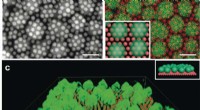
- Molecular machines are typically constructed through self-assembly processes where individual molecules spontaneously organize into larger structures.
- This self-assembly is driven by non-covalent interactions such as hydrogen bonding, van der Waals forces, or metal-ligand coordination.
- Scientists design molecules with complementary binding sites that guide the self-assembly process and form the desired molecular machine architecture.
3. Energy Input:
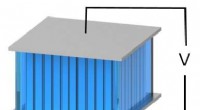
- To induce rotary motion, an external energy source is required. This energy input can come from various sources, such as light, chemical fuels, or electrical fields.
- In light-driven molecular motors, for example, light energy is absorbed by a photosensitive molecule, which triggers conformational changes and initiates rotation.
- In chemically driven motors, specific chemical reactions provide the energy needed for rotation.
4. Controlled Motion:
- Scientists incorporate control mechanisms into the molecular machines to regulate the direction and speed of rotation.
- This can be achieved through external stimuli such as light pulses, changes in temperature, or the addition of specific chemical species.
- Controlling the rotation direction and speed is essential for specific applications, such as directed molecular transport or nanoscale manipulation.
5. Characterization and Analysis:
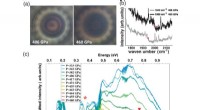
- The performance of molecular rotary machines is characterized using various techniques, including single-molecule imaging, spectroscopy, and electrochemistry.
- These techniques allow scientists to observe the rotational motion, measure its speed, and analyze the efficiency of the machine.
6. Application and Integration:
- Molecular rotary machines have potential applications in various fields, such as nanoscale electronics, drug delivery, sensing, and energy conversion.
- Scientists are exploring ways to integrate these machines into larger systems or devices to achieve complex functions at the nanoscale.
Building rotary machines with molecules requires a combination of molecular design, self-assembly, energy input control, characterization, and integration. As scientists gain a deeper understanding of molecular mechanics and self-assembly processes, they continue to advance the field of molecular machines and explore their potential applications in various technological areas.