Nuclear waste is a serious environmental problem. It is highly radioactive and can remain dangerous for thousands of years. Traditional methods of nuclear waste cleanup are expensive and time-consuming. However, a new technology is emerging that could offer a more efficient and cost-effective way to clean up nuclear waste.
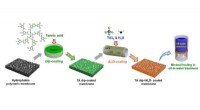
This new technology involves the use of bacteria that bind toxic metals. These bacteria are found in nature and they have the ability to absorb and store heavy metals in their cells. This means that they can be used to remove toxic metals from nuclear waste.
Researchers are currently investigating the use of these bacteria to clean up nuclear waste at several sites around the world. One of the most promising sites is the Hanford Nuclear Site in Washington state. The Hanford Nuclear Site is home to a large amount of nuclear waste, and it is considered to be one of the most polluted sites in the United States.
Researchers at the Hanford Nuclear Site have been using bacteria to clean up nuclear waste for several years. They have found that these bacteria are effective at removing toxic metals from the waste. In addition, the bacteria are relatively inexpensive to use and they do not produce any harmful byproducts.
The use of bacteria to clean up nuclear waste is still in its early stages, but it has the potential to revolutionize the way that we clean up nuclear waste. This technology could offer a more efficient and cost-effective way to clean up nuclear waste, and it could help to reduce the environmental impact of nuclear power.
Here are some of the benefits of using bacteria to clean up nuclear waste:
* Bacteria are effective at removing toxic metals from nuclear waste.
* Bacteria are relatively inexpensive to use.
* Bacteria do not produce any harmful byproducts.
* Bacteria can be used to clean up nuclear waste in a variety of environments.
Here are some of the challenges of using bacteria to clean up nuclear waste:
* Bacteria can be difficult to control.
* Bacteria can sometimes produce harmful gases.
* Bacteria can sometimes be harmful to the environment.
Overall, the use of bacteria to clean up nuclear waste has the potential to revolutionize the way that we clean up nuclear waste. This technology could offer a more efficient and cost-effective way to clean up nuclear waste, and it could help to reduce the environmental impact of nuclear power. However, more research is needed to fully understand the benefits and challenges of using bacteria for this purpose.