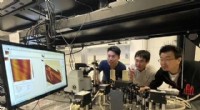
A team of researchers led by the Department of Energy's Los Alamos National Laboratory and including scientists from the University of California, Davis and the University of Oklahoma has developed a computer model that simulates the process of methane hydrate formation and dissociation in marine sediments and permafrost. The researchers used the model to examine the effects of various environmental conditions on methane hydrate formation, such as temperature, pressure, and the availability of methane and water.
The model results suggest that large deposits of methane hydrate can form when methane-rich fluids migrate upward through marine sediments or permafrost and encounter zones where the temperature and pressure are favorable for hydrate formation. The fluids cool as they rise, causing the methane to become less soluble in water. As the methane becomes less soluble, it forms bubbles that rise through the sediment or permafrost. When these bubbles reach a zone where the temperature and pressure are high enough, they coalesce and form hydrate crystals.
The researchers found that the size of the hydrate deposits is controlled by the rate at which methane-rich fluids migrate through the sediment or permafrost. If the fluids migrate too slowly, the methane will have time to dissolve back into the water before it reaches the zone where hydrate can form. If the fluids migrate too quickly, the bubbles will be too small to coalesce and form hydrate crystals.
The model results provide new insights into the processes that form large deposits of methane hydrate and could help scientists identify potential targets for future energy production.
The research is described in a paper published in the journal _Geophysical Research Letters_ and was funded by the Department of Energy's Office of Basic Energy Sciences.