1. Adsorption and Desorption:
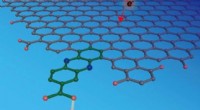
At lower temperatures, gas molecules may physisorb (weakly adsorb) on the surface due to van der Waals forces. As temperature increases, these molecules gain enough energy to overcome the adsorption energy, leading to desorption. This process of adsorption and desorption is important in gas storage and separation technologies.
2. Surface Reactions:
At higher temperatures or with highly reactive gases, chemical reactions can occur between the surface and the gas molecules. These reactions can lead to the formation of new chemical species, surface modifications, or the release of gaseous products. For example, in catalytic reactions, surfaces are designed to facilitate specific chemical reactions with the gas phase.
3. Oxidation:
When a surface is exposed to oxygen or other oxidizing gases, it may undergo oxidation, leading to the formation of oxides or other compounds. This can result in changes in surface composition, morphology, and properties. Oxidation is a common issue in corrosion and material degradation processes.
4. Reduction:
In reducing environments, surfaces can undergo reduction reactions, where oxygen or other elements are removed from the surface. This can alter the surface's chemical state, electronic properties, and reactivity. Reduction processes are vital in metallurgy and extractive metallurgy.
5. Etching and Sputtering:
High-energy gas phases, such as plasmas or energetic ion beams, can cause physical changes to the surface through etching or sputtering. These processes involve the removal of surface atoms or molecules, leading to changes in surface texture, roughness, and morphology. Etching and sputtering are used in semiconductor processing, surface cleaning, and materials modification.
6. Contamination and Cleaning:
Surfaces can be contaminated by impurities or unwanted species from the gas phase. Cleaning procedures, such as chemical treatments or vacuum annealing, may be necessary to restore the surface's original state or achieve desired properties.
7. Surface Morphology Evolution:
Under certain conditions, the interaction between the surface and the gas phase can lead to the evolution of surface morphology. This can manifest as the formation of surface features, such as pits, mounds, or dendrites, influenced by factors like temperature, gas composition, and reaction kinetics.
The changes that occur on surfaces in contact with reactive gas phases are closely related to the specific gas-surface interactions. By understanding and controlling these interactions, scientists and engineers can design and engineer surfaces for various applications, optimize processes, and develop new materials with tailored properties.