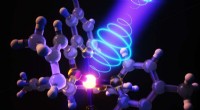
According to a study published in the journal Nature Communications, the team created a new system – inspired by photosynthesis – that uses visible light to generate reactive radical species that can trigger polymerization. This system achieves nearly perfect conversion of monomers to polymers with high-resolution patterning and improved mechanical strength.
Photopolymerization is a widely used technique in various industries, including 3D printing, dentistry, and microelectronics, where liquid monomers are converted into solid polymers upon exposure to light. However, the efficiency of photopolymerization is limited by the low absorption of visible light by the photoinitiators, which are typically organic dyes.
Addressing this challenge, the research team drew inspiration from photosynthesis, the process by which plants convert sunlight into chemical energy. Photosynthesis utilizes light-absorbing pigments to capture solar energy and generate reactive intermediates that drive chemical reactions.
The researchers implemented a similar strategy by incorporating a metal-ligand complex into the photopolymerization system. This metal-ligand complex acts as an artificial light-harvesting unit that efficiently captures visible light and generates reactive radical species capable of initiating polymerization.
By using this approach, the researchers achieved nearly 100% conversion of monomers into polymers with high-resolution patterning and enhanced mechanical properties. This represents a significant improvement compared to conventional photopolymerization methods, which typically exhibit lower conversion efficiencies.
The study opens new avenues for developing more efficient and environmentally friendly photopolymerization techniques with potential applications in advanced manufacturing, 3D printing, and microelectronics. By enhancing visible light absorption and achieving higher conversion efficiencies, this technology could reduce energy consumption and improve the performance of various light-based fabrication processes.