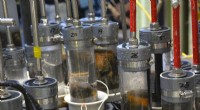
- Crude oil is first heated in a distillation column to separate it into its various components, such as gasoline, diesel, and jet fuel.
- This process is based on the principle that different components of the oil have different boiling points.
- The lighter components, such as gasoline, have lower boiling points and will vaporize first, while the heavier components, such as diesel, have higher boiling points and will vaporize later.
- The vapors are then condensed and collected to produce different petroleum products.
Step 2: Conversion
- Some of the heavier components from distillation, such as heavy gas oil, can be broken down into lighter components, such as gasoline and diesel, through a process called cracking.
- There are two main types of cracking: thermal cracking and catalytic cracking.
- Thermal cracking involves heating the heavy oil to a high temperature in the absence of a catalyst, which causes the molecules to break down into smaller fragments.
- Catalytic cracking uses a catalyst, such as zeolites, to speed up the cracking process and produce more desirable products.
Step 3: Reforming
- Reforming is a process used to convert low-octane gasoline into high-octane gasoline.
- Octane is a measure of a fuel's resistance to knocking, which is an abnormal combustion that can occur in gasoline engines.
- Catalytic reforming uses a catalyst, such as platinum or rhenium, to rearrange the molecular structure of the gasoline to increase its octane rating.
Step 4: Blending
- The various refined petroleum products are blended together to create the finished products that are sold to consumers, such as gasoline, diesel, and jet fuel.
- Blending is used to achieve the desired properties, such as octane rating, cetane number, and viscosity.
Step 5: Treating
- Refining also includes a number of treating processes to remove impurities, such as sulfur and nitrogen, from petroleum products.
- Treating processes can include hydrotreating, sweetening, and acid gas removal.
Step 6: Storage and Distribution
- The finished petroleum products are stored in storage tanks and then distributed to consumers through pipelines, tanker trucks, and barges.