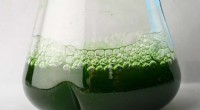
Milligrams per milliliter (mg/mL) is a measurement of a solution’s concentration. In other words, it’s the amount of one substance dissolved in a specific volume of a liquid. For example, a salt water solution of 7.5 mg/mL has 7.5 milligrams of salt in each milliliter of water. To find the concentration of a solution, divide the dissolved mass by the volume of the solution.
If your mass is in grams, convert it to milligrams by multiplying by 1,000. For example, if you have 4 grams, work out 4 x 1,000 = 4,000. If your mass is in kilograms, multiply by 1,000,000. For example, if you have 4 kilograms, work out 4 x 1,000,000 = 4,000,000.
If your volume is in litres, convert it to milliliters by multiplying by 1,000. For example, if you have 2 liters, work out 2 x 1,000 = 2,000. If your volume is in kiloliters, multiply by 1,000,000. For example, if you have 0.5 kiloliters, work out 0.5 x 1,000,000 = 500,000.
Divide the mass in milligrams by volume in milliliters to find concentration in mg/mL. For example, if you have 8,000 milligrams of sugar dissolved in 200 milliliters of water, work out 8,000 ÷ 200 = 40. The concentration of the solution is 40 mg/mL. This means there are 40 milligrams of sugar dissolved in each milliliter of water.