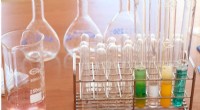
A simple way to express the concentration of a solution (a solute dissolved in a liquid) is weight by volume (w/v). To find weight by volume, divide the mass in grams of the dissolved solute by the volume in milliliters of the entire solution. Typically, weight by volume is expressed as a percentage. For example, a solution may have a concentration of 30 percent.
Before calculating the weight by volume of your solution, take note of the mass (in grams) of the dissolved solute and the volume (in milliliters) of the whole solution. For example, if you have created a 500 milliliter solution by adding 100 grams of salt to water, the mass is 100 and the volume is 500.
Divide the mass by the volume to find w/v. In this case, work out 100 ÷ 500 = 0.2.
Multiply your decimal value by 100 to convert it to a percentage. In this case, work out 0.2 x 100 = 20. The concentration of your solution is 20 percent w/v salt or 20 percent weight by volume salt.
If your mass and volume measurements are not in grams and milliliters, convert them. For example, convert kilograms to grams and liters to milliliters by multiplying by 1,000.