Aged cells have accumulated damage over time and no longer respond as quickly as they should, which makes it harder for the body to restore homeostasis. Homeostasis is the process in which the body maintains balance regarding things like body temperature, water levels, and heart rate. The longer a person lives, the more damage occurs to their DNA and to the materials outside of their cells. The changes inside and outside of cells prevents organs from responding as robustly as they used to. These effects of aging can be dramatically observed in the function of the heart and the circulatory system. The dysfunctional stem cells of an older person also contribute to the inability to restore homeostasis.
Homeostasis often works by the release of hormones from one organ, which communicates with distant organs. However, as a person ages the target organs become less responsive to the signals that are sent from other organs. Furthermore, hormone levels may not be at their proper levels in the blood. Hormones that usually decrease with age are aldosterone, calcitonin, growth hormone and renin. In women, estrogen and prolactin decrease with age. In men, testosterone decreases with age.
Aging reduces the efficiency of the heart and circulatory system, which slows down the process of homeostasis. As a person ages, the walls of the heart and the walls of the blood vessels thicken. This means that less blood, oxygen, and nutrients are pumped to the rest of the body. Thicker blood vessels mean that nutrients and wastes have a harder time diffusing in and out of tissues. Thicker heart walls means that less blood is pumped by the heart. An old person also retains less water in their blood, so blood pressure usually decreases. A decrease in blood pressure means that nutrients are not pumped throughout the body as fast as they used to be.
Damaged mitochondria are a big reason why cells age and no longer function properly. Mitochondria are pouches in a cell that serve as the power plants, producing energy molecules that power the protein machines in the cell. They are special pouches, or organelles, because they have their own DNA. Over time, the DNA of mitochondria becomes mutated, which causes these organelles to become deformed and dysfunctional. This is a major reason why cells age and no longer do their jobs as well as they used to.
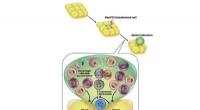
Stem cells are cells that divide to produce new cells, while not losing their ability to keep producing new cells. Cells that arise from stem cells take the place of old cells that die or cells that are shed. Homeostasis only works if organs have enough cells that can respond to stimuli from other organs. As a person ages, stem cells lose their ability to produce new cells. This means that damaged organs cannot heal themselves. It is believed that stem cells accumulate mutations over time, which causes them to slow down and stop dividing.