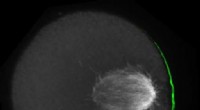
Chromatin is made up of DNA and the proteins that package it. This packaging is highly dynamic, meaning chromatin can change shape to pack DNA into denser, larger structures. Chromatin can also affect how easily the information in DNA can be read into RNA, by tightening or loosening the grip of the package proteins on the DNA. Different stretches of DNA have different physical addresses within the nucleus, and chromatin is what determines those locations. Lastly chromatin helps the process of repairing damaged DNA, by loosening its grip on DNA regions that are near the damaged area so that repair proteins can enter.
Chromatin is defined as a complex of DNA and the proteins that package it. Chromatin has many levels of structure. The simplest level of chromatin is when DNA is wrapped around a ball of proteins called histones. These balls then condense, or stick together, to form a fiber called the 30 nanometer fiber. This fiber then folds onto itself to form a thicker fiber. Beyond this, the exact structure of chromatin that exists when chromosomes condense into X-shaped structures during mitosis is unclear. Chromatin is why 2 to 3 meters of DNA can be packed into one microscopic human cell.
Transcription is the process in which the information encoded by DNA is read by proteins and then transcribed into RNA. RNA will later be translated into proteins that do the day-to-day work of the cell. Transcription only happens when the proteins that read DNA can bind to the DNA. If the structure of chromatin packs DNA too tightly, there is no room for the reader proteins to bind to DNA. There are two types of chromatin in cells. Euchromatin is a type of chromatin that is loosely packed such that DNA can be read and RNA can be produced. Heterochromatin is a type of chromatin that is packed too tightly for DNA to be read by proteins.
The nucleus contains a cell’s DNA, but is more than just a membrane pouch. The inside of the nucleus contains a highly organized structure of proteins that interacts with chromatin. Chromatin is what makes up chromosomes. The interaction between what is called the nucleoskeletal structure and chromatin is what determines the location of different stretches of chromosomes within the nucleus. The exact reasons why different stretches of chromosomes have different physical addresses within the nucleus are unknown, but they generally have to do with gene expression. Gene expression is the process in which the information in DNA is read and transcribed into RNA.
Chromatin is a highly dynamic arrangement of proteins and DNA, meaning chromatin can readily change its shape and structure. When a DNA in the cell breaks, there are proteins that detect this break and repair the DNA. However, the repair proteins cannot do their job if they cannot bind to the DNA molecule that is part of the chromatin. Thus, the chromatin around the damaged area changes shape, loosens its grip on the DNA, and allows the repair proteins to bind to DNA.