Protists are called plantlike, funguslike or animal-like because they share some of the characteristics of plants, fungi or animals, even though they belong in a different category, the kingdom Protista. They are all eukaryotes (that is, they have a nucleus) and all live in moist conditions, whether in salt or freshwater or inside other organisms. They have only one cell, though some look multicelled as they live in colonies. Animal-like protists are also called protozoa, or “first animals,” as they developed from bacteria to become the evolutionary forebears of more complex animals.
Almost all protozoans are heterotrophs -- that is, they find food from their environment, as they cannot make their own within the cell as plants do. The cell is surrounded by a membrane and contains tiny structures called organelles, including mitochondria and digestive vacuoles, which carry out essential functions, such as converting oxygen and food to energy.
There are four main types of protozoans, classified according to how they move and where they live: rhizopoda (protists with “false feet” called pseudopodia); ciliates (protists covered in tiny hairlike cilia); flagellates (protists with whiplike “tails”); or sporozoa (parasitic protists). Most amoebas, ciliates and flagellates are free living and form an important part of the ecosystem by suppressing certain bacteria and being a food source for larger organisms.
The main protists in this group are amoebas, which live in freshwater or as parasites and foraminifers, which live in the sea and form shells. They are all characterized by pseudopodia (“false feet”) -- lobes or fingerlike bulges of cytoplasm, which enable them to move. They feed on bacteria and smaller protozoans by capturing them in their pseudopodia and engulfing them in vacuoles, where enzymes digest them. Waste and excess water pass out through holes in the cell membrane. Amoebas reproduce asexually by binary fission, where the nucleus splits into two and a new cell forms round each. Foraminifers reproduce differently in alternate generations -- asexually by fission, then sexually by joining together to exchange nucleic material. A few amoebas live as parasites; for example, entamoeba, the source of amoebic dysentery.
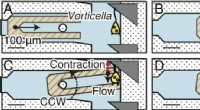
Ciliates, such as paramecium, have tiny hairlike structures called cilia growing from their surfaces. The cilia propel them through water and capture food by wafting it into a mouthlike groove in the surface membrane. They feed on algae and bacteria, and are in turn eaten by larger protozoans, such as amoeba. Ciliates have more than one nucleus: a large one that governs everyday functions and smaller ones for reproductive purposes. Some ciliates reproduce both sexually and asexually -- first they join together to exchange reproductive nuclei, and then the resulting double nuclei split to create new cells.
Flagellates have a whip or tail-like structure to propel them through the water. A few, the phytoflagellates, can make their own food through photosynthesis, as plants do. Others engulf food particles into vacuoles, or absorb molecules of nutrients through their surface membrane. Most flagellates reproduce by fission, but some do it sexually by fusing with each other before dividing. Some flagellates are parasitic; for example, trypanosoma and giardia cause sleeping sickness and giardiasis (diarrhea and vomiting) respectively.
Sporozoans are parasitic -- they live on, or in, a host body and cause it harm. Two of the most serious human parasitic diseases are malaria or coccidiosis. Lacking cilia, flagella or pseudopodia, sporazoa depend on their host organism for nourishment, and on vectors, such as mosquitoes to carry them there. They pass from host to host, or vector to host, as spores. Sporozoa are also called apicomplexa because they have an “apical complex,” a structure that produces enzymes and enables the protist to wedge itself into the host cell. Reproduction has both sexual and asexual stages.