Cells, the smallest biological structure in existence, are of great importance. By comparing and contrasting the different kingdoms, such as Protista and Animalia, you can obtain a greater understanding of the world as a whole.
Historically, protists and human cells vary by their classification, belonging to the protista and animalia kingdoms respectively.
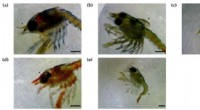
Although both protist and animal cells are eukaryotic cells, protists are typically unicellular or arranged in colonies and more simplistic. Animal cells, like that of a human, are multi-cellular with specialized cells.
Both types of cells contain a nucleus and are enveloped by either a membrane or cell wall. This outside structure, acting as a barrier, protects the cell and maintains the homeostasis. However, animal cells contain many more specialized cells such as rough and smooth endoplasmic reticulum, ribosomes, golgi bodies, mitochondria, vesicles and lysosomes. Some protist cells differ by employing the use of outside structures known as flagella.
Protists are classified as either phototrophs or organtrophs. They find energy from sunlight or ingesting other organisms. Animal cells rely only on ingesting other organisms as their energy source.
Protists can reproduce both sexually, by an exchange of DNA, and asexually, by the division of its own cells, depending upon the organism. Animal cells, complex structures, can only reproduce sexually.