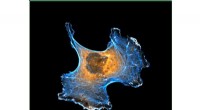
Organelles are tiny structures located within the wall of an organism's cell. The organelles within a cell vary depending upon the organism. Plants may have organelles that animals do not have and animals may have organelles plants don't have. All organelles covered in this article are possessed by both plants and animals. The organelles may look slightly different depending upon the organism or even the location of the cell within the organism, but the basic structure and function of the organelles is always the same.
The cell membrane provides protection and support to the cell. In plants it is located inside the cell wall, while in animals it is the outer layer of the cell. It is made of cholesterol and is selectively permeable, which means that some substances can easily enter the cell through the membrane while others cannot.
The nucleus is the brain of the cell. This oval or circle-shaped structure controls and organizes the activities of the cell. The nucleus is surrounded by a nuclear membrane that cushions and supports it. The nuclear membrane is selectively permeable. The nucleolus is located inside the nucleus and contains RNA.
Under a microscope, the endoplasmic reticulum looks like a squiggly group of tubes or lines. This structure moves things within the cell and transports nutrients and other substances the cell needs.
The mitochondria is the largest organelle aside from the nucleus. This oval-shaped structure regulates the water balance within the cell. It also breaks down fats, proteins and carbohydrates and turns them into energy.
This is the material in which the organelles are situated and organized. This jelly-like substance provides support and is located within the cell wall.
Ribosomes are tiny, circular structures that produce protein. They may be attached to the endoplasmic reticulum or may be situated within the cytoplasm.
Some organelles are found in the cells only of some plants and some animals. These include the vacuoles, which store food, water and waste; lysosomes digest decaying or useless parts of the cell. Plants also possess two organelles that animals do not. Chloroplasts help plants to process sunlight and cell walls provide support to plant stalks.