Deoxyribonucleic acid (DNA) is the blueprint for life. Inside the nucleus of a microscopic eukaryotic cell, chromosomal DNA stores all the instructions needed to build a fully functional organism.
DNA consists of four chemical bases—adenine (A), guanine (G), cytosine (C) and thymine (T). Adenine pairs with thymine (A‑T) and cytosine pairs with guanine (C‑G). These bases attach to a sugar‑phosphate backbone, forming nucleotides that organize into a double‑stranded helix. The nucleotide sequence encodes the information that directs cellular function.
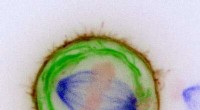
During cell division, each DNA strand replicates. The nucleus signals the cell to divide only after chromatin has fully replicated. Sister chromatids condense, line up at the metaphase plate, and are pulled apart by spindle fibers, resulting in two daughter cells—a process called mitosis.
Chromosomes are linear DNA molecules packaged with histone proteins. In humans, each diploid cell contains 23 pairs of homologous chromosomes, for a total of 46. The term ploidy refers to the number of chromosome sets in a cell. Simple organisms like bacteria often have a single circular chromosome, whereas multicellular eukaryotes possess sets of homologous chromosomes.
Homologous chromosomes—pairs that match in size, shape, and gene content—carry the same genes at the same loci, although the alleles may differ. During meiosis, homologues undergo recombination, shuffling alleles and generating genetic diversity.
Haploid (n) cells contain a single set of chromosomes. Gametes—sperm and egg—are haploid, each carrying 23 chromosomes in humans. Because they possess only one allele per gene, haploid cells contribute half the genetic material during fertilization.
Diploid (2n) cells contain two sets of chromosomes, one inherited from each parent. Somatic cells are diploid, holding 46 chromosomes in humans. Diploid cells reproduce by mitosis, yielding two genetically identical daughter cells.
Beyond haploid and diploid, some organisms exhibit polyploidy, such as triploid (3n) or hexaploid (6n) forms. For instance, certain cultivated wheat varieties are hexaploid, possessing six sets of chromosomes. Extra chromosome sets can confer advantages, like increased vigor, or cause sterility, depending on the species.
Diploid cells are the workhorses of the body. They carry the complete set of genetic instructions, enabling cells to perform specialized functions—metabolism, signaling, structural support, and more. Mitosis, the mitotic division of diploid cells, is essential for growth, tissue repair, and replacement of cells such as epithelial linings.
Haploid cells are critical for sexual reproduction. Meiosis reduces the chromosome number from diploid to haploid, ensuring that each gamete contributes only one set of chromosomes. When a sperm and an egg unite, the resulting diploid zygote inherits one set from each parent, restoring the diploid state and allowing embryonic development to proceed.
Meiotic recombination introduces genetic variation, giving populations the flexibility to adapt to changing environments. Without this process, every offspring would be a clone of its parents.
Triploid organisms possess three chromosome sets (3n). Some animals—such as salmon, salamanders, and certain goldfish—are naturally triploid and thrive in their habitats. In aquaculture, triploid oysters are prized for their fast growth and disease resistance, though they are sterile. Scientists have developed chemical‑free methods to induce triploidy, enhancing commercial viability without genetic modification.
Many plants exhibit an alternating life cycle, cycling between haploid gametophytes and diploid sporophytes. For example, ferns produce diploid sporophytes that release haploid spores. These spores develop into gametophyte plants that generate haploid sperm and eggs. Fertilization restores the diploid state, completing the cycle.
In eukaryotic cells, DNA is organized into chromosomes that replicate during the S phase of interphase. In mitosis, replicated chromosomes (now sister chromatids) separate to produce two diploid daughters. Meiosis, on the other hand, comprises two successive divisions: meiosis I reduces the chromosome number by separating homologous pairs, while meiosis II separates sister chromatids, yielding four haploid gametes.
Although checkpoints correct many errors, missegregation can occur, leading to aneuploidy. For instance, trisomy 21—an extra copy of chromosome 21—causes Down syndrome. Similarly, organisms with mixed chromosome sets from different species often experience sterility or developmental abnormalities.