Comstock Images/Comstock/Getty Images
In every eukaryotic cell, DNA is not a free‑floating molecule but a highly organized entity that must fit into a microscopic space while ensuring accurate inheritance and proper gene activity. The tight packaging of DNA into nucleosomes and chromosomes is essential for these tasks.
DNA is a polymer of nucleotides that forms double‑helical strands. These strands wrap around histone proteins to form nucleosomes, the fundamental repeating units of chromatin. The nucleosome core particle, consisting of an octamer of histones (H2A, H2B, H3, and H4), is wrapped by ~147 base pairs of DNA, creating a “beads‑on‑string” appearance. Further compaction involves higher‑order folding of nucleosome arrays into 30‑nm fibers and beyond, culminating in the highly condensed chromosomes observed during mitosis.
References: Nature 2021, NCBI Bookshelf
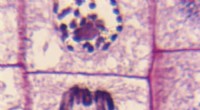
During most of the cell cycle, chromatin remains in a loosely folded state, allowing transcriptional machinery access to genes. Condensation occurs during prophase and metaphase of mitosis, when the condensed chromatin bundles into distinct chromosomes. This compaction ensures that each daughter cell receives an exact copy of the genome.
Before mitosis, the genome is duplicated during S‑phase, producing sister chromatids that align along the metaphase plate. Proper alignment and tension from spindle microtubules guarantee accurate segregation. Failure to condense or misalign chromosomes can lead to aneuploidy—often the hallmark of cancerous cells—or cell death.
References: Cell 2016, Science 2017
Transcription factors (TFs) bind to specific DNA motifs in promoter or enhancer regions to activate or repress gene transcription. When chromatin is open, TFs and RNA polymerase II can readily access DNA. In contrast, tightly wrapped chromatin physically occludes binding sites, suppressing transcription.
Histone tails can undergo post‑translational modifications—acetylation, methylation, phosphorylation—that modulate DNA–histone affinity. For example, histone acetylation neutralizes positive charges, reducing nucleosome stability and promoting an open chromatin state. Conversely, methylation at certain residues can either activate or repress transcription depending on the context.
These dynamic changes constitute the epigenetic landscape that determines cell‑type‑specific gene expression patterns without altering the underlying DNA sequence.
References: Nature Reviews Molecular Cell Biology 2013, Cell Systems 2020