Charles Darwin, a foundational figure in evolutionary biology, defined evolution as an ongoing process of descent with modification. He argued that environmental pressures shape which organisms survive and reproduce, passing on the traits that confer survival advantages.
Evolutionary theory explains how species diversify to occupy ecological niches and develop adaptive characteristics. It represents the gradual, cumulative changes organisms undergo over time.
Darwin also identified the mechanisms that make evolution possible—processes that drive genetic change and selection.
Natural selection is widely regarded as the primary engine of evolutionary change. Three core principles underlie this process:
1. Variation: Populations exhibit differences in traits—consider a field‑mice population ranging from tan to white.
2. Heritability: Many of these traits are passed from parents to offspring.
3. Differential Reproduction: Not all individuals reproduce equally; some escape predation, reproduce successfully, and transmit advantageous traits.
When a trait enhances survival or reproductive success, it becomes more common in subsequent generations. For example, tan and brown mice, better camouflaged against predators, are more likely to survive and pass on their coloration, gradually shifting the population toward those hues.
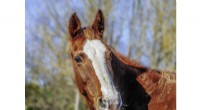
Artificial selection mirrors natural selection but is guided by human intent. Selective breeding allows breeders to amplify desired traits—such as strength in horses or milk yield in cows—by choosing specific parents for reproduction.
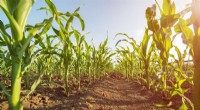
Plant breeders similarly select varieties that produce abundant fruit or larger flowers, directing the genetic trajectory of cultivated species.
Microevolution refers to modest, short‑term changes in the gene pool of a species or a single population. Causes include natural selection, artificial selection, genetic drift, and gene flow.
Macroevolution occurs over vast timescales and encompasses large‑scale transformations—such as speciation events—often arising from cumulative microevolutionary changes.
Coevolution describes reciprocal evolutionary changes between interacting species. For instance, a bird adapting to feed on a particular bug may trigger the bug to develop a protective shell, prompting the bird to evolve a beak capable of cracking that shell. Such interdependent adaptations illustrate the “domino effect” of natural selection across species.