Thomas Northcut/Digital Vision/Getty Images
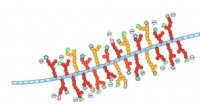
Spliceosomes—complex assemblies of proteins and small nuclear RNAs—are the enzymes that refine the genetic blueprint carried by messenger RNA (mRNA). DNA transcription produces a pre‑mRNA transcript that contains both coding sequences (exons) and non‑coding introns. Before this transcript can direct protein synthesis, the spliceosome excises introns and ligates exons to generate mature, functional mRNA.
The spliceosome assembles stepwise on the pre‑mRNA, recruiting one component at a time. This sequential assembly folds the RNA into a distinctive S‑shaped loop, positioning the splice sites for catalysis. Once fully assembled, the spliceosome cleaves the phosphodiester bonds at the intron boundaries and re‑joins the flanking exons, producing a continuous coding sequence ready for translation. Key snRNAs—U1, U2, U4, U5, and U6—direct the precise cutting and ligation events. The mature mRNA is then exported to the cytoplasm where ribosomes translate it into protein.