All living organisms on Earth interact with one another, their surroundings, and non‑living (abiotic) elements. The scientific study of these intricate relationships is called ecology. Ecology is organized into nested levels that range from the broadest view of the planet down to individual species. These layers help scientists describe how life is structured across the globe and how it functions within its environment.
A biome is a vast geographic region defined by its dominant plant and animal communities, shaped largely by climate. It represents the widest ecological classification. Typical biomes on Earth include:
Within each biome lie diverse ecosystems, habitats, communities, and populations, each shaped by the local climate and geography. Ecologists often specialize in studying relationships specific to a particular biome.
An ecosystem encompasses all living (biotic) and non‑living (abiotic) components within a defined area and the interactions among them. This level is more specific than a biome. Examples of ecosystems within the marine biome include:
In ecosystems, energy flows through food chains, nutrients cycle via biogeochemical processes, and species coexist in complex webs of interaction.
A community consists of all the populations of different species that interact within a particular area—for instance, the trees, birds, insects, and microbes in a forest stand. Community ecology focuses on how these species organize, function, and influence one another. This branch of ecology zooms in further on the structure and dynamics of biological communities.
Each community is made up of multiple populations, where a population is a group of individuals of the same species sharing a common geographic area. Examples include all clownfish in a coral reef or all mountain goats in a range. Population ecologists study metrics such as size, growth rates, spatial distribution, density, and temporal changes to understand how populations respond to environmental pressures.
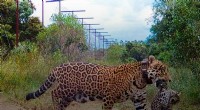
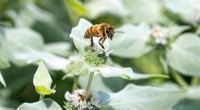
At the most specific level, ecology examines individual organisms—from bacteria to elephants. Organismal ecology investigates behavior, feeding habits, physiological adaptations, and niche occupation in response to environmental conditions. By studying these niches, scientists uncover how species evolve, adapt, and contribute to the resilience of their habitats.
Each hierarchical level of ecology—from biomes down to individual organisms—provides a lens for understanding the complexity and interdependence of life on Earth.