By Kevin Beck
Updated Aug 30, 2022

In eukaryotic cells, the DNA that encodes every protein is housed in the nucleus. Once a gene is transcribed into messenger RNA (mRNA), that molecule must travel to the cytoplasm—where ribosomes reside—to direct protein synthesis. This export step is not passive; it requires dedicated cellular machinery.
DNA and RNA are long polymers made from nucleotides—each consisting of a sugar, a phosphate group, and a nitrogenous base. DNA uses the sugar deoxyribose, while RNA uses ribose, which has an additional hydroxyl group. DNA contains the bases adenine (A), cytosine (C), guanine (G), and thymine (T). RNA replaces thymine with uracil (U). The complementary base‑pairing rules (A‑T and C‑G in DNA, A‑U and C‑G in RNA) create the double‑helix structure first described in the 1950s.
Transcription begins when RNA polymerase II attaches to a gene’s promoter region. The enzyme unwinds a single DNA strand and builds an mRNA strand that is complementary to the template DNA, but with uracil instead of thymine. The resulting mRNA carries a triplet code that specifies each of the 20 amino acids, enabling the creation of virtually limitless proteins.
After synthesis, the nascent mRNA associates with a suite of RNA‑binding proteins to form messenger ribonucleoprotein particles (mRNPs). These complexes shield the mRNA and recruit export factors that recognize specific nuclear export signals. The mRNPs then diffuse throughout the nucleoplasm; proximity to the nuclear envelope is not a prerequisite for successful export.
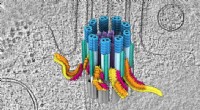
The nuclear envelope is punctuated by nuclear pore complexes (NPCs), gigantic protein assemblies with a mass of ~125 million Daltons in humans—over 700,000 times the mass of a glucose molecule. NPCs consist of cytoplasmic and nucleoplasmic rings, filaments, and a central transport channel. They selectively ferry macromolecules in and out of the nucleus, using transport receptors that bind cargoes and facilitate passage through the pore.
mRNA export is energy‑dependent: ATP hydrolysis powers motor proteins that pull mRNPs toward the pore, while nucleoporins coordinate the release of cargo into the cytoplasm.
In the cytoplasm, ribosomes—either free or bound to the rough endoplasmic reticulum—engage mRNA. Each ribosome has a small and a large subunit that assemble when translation starts. Transfer RNAs (tRNAs) bring specific amino acids to the ribosome, matching codons on the mRNA with their anticodons. The ribosome links amino acids into a growing polypeptide chain, which, upon reaching a stop codon, detaches and folds into a functional protein.
Understanding this journey—from transcription in the nucleus to protein synthesis in the cytoplasm—highlights the intricate choreography that underpins cellular life.