If you’re the only blue‑eyed member of a family of brown‑eyed parents, the mystery usually lies in Mendelian inheritance rather than any family secrets.
In the 1860s, Austrian monk Gregor Mendel set the stage for modern genetics by carefully cross‑pollinating pea plants over eight years. His observations established the principles of dominant and recessive traits, forming the foundation of what we now call Mendelian genetics.
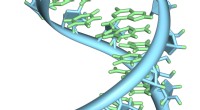
Every cell’s nucleus contains DNA—nature’s blueprint. Genes are segments of DNA located on chromosomes, and each gene can exist in multiple forms called alleles. A child inherits one allele from each parent, and the combination determines the genotype and observable characteristics, the phenotype.
For example, eye color is controlled by alleles that encode proteins responsible for pigment production. A pair of brown‑eye alleles produces a homozygous dominant genotype, while one brown and one blue allele results in a heterozygous genotype.
Dominant alleles, such as those for brown eyes, mask recessive alleles when present together. This explains why a child can inherit a recessive blue‑eye allele from one parent and still exhibit brown eyes if the other parent contributes a dominant allele.
In a cross between two heterozygous parents, the classic 1:2:1 ratio predicts that 25 % of offspring will be homozygous dominant, 50 % heterozygous, and 25 % homozygous recessive.
The Punnett square is a simple diagram that predicts the possible allele combinations in offspring. It helps illustrate how a heterozygous parent (one dominant, one recessive allele) can produce both dominant and recessive phenotypes in the next generation.
Some genetic disorders are autosomal dominant, meaning that inheriting just one defective copy of a gene can cause disease. Huntington’s disease is a classic example. In contrast, cystic fibrosis is recessive—both parents must contribute a mutated allele for the disease to manifest.
| Dominant Traits | Recessive Traits |
|---|---|
| Ability to roll your tongue | Lacking ability to roll your tongue |
| Unattached earlobes | Attached earlobes |
| Dimples | No dimples |
| Huntington’s disease | Cystic fibrosis |
| Curly hair | Straight hair |
| A and B blood type | Blood type O |
| Dwarfism | Normal growth |
| Baldness in males | No baldness in males |
| Hazel and/or green eyes | Blue and/or grey eyes |
| Widow’s peak hairline | Straight hairline |
| Cleft chin | Normal/smooth chin |
| High blood pressure | Normal blood pressure |
Understanding dominant alleles offers insight into why certain traits appear more frequently in families, how genetic diseases can arise, and why some phenotypes are expressed only when both parents contribute specific alleles. Whether you’re curious about eye color or a hereditary condition, the principles laid down by Mendel still guide modern genetics.