Jupiterimages/Photos.com/Getty Images
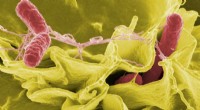
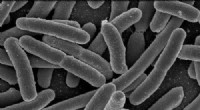
In prokaryotes such as bacteria, reproduction occurs via binary fission, a straightforward division that duplicates the entire cell, including its circular DNA.
In contrast, eukaryotic cells—found in plants, animals, and fungi—enclose their genetic material within a membrane‑bound nucleus and house numerous specialized organelles.
Eukaryotic cells possess a plasma membrane, a gel‑like cytoplasm, DNA confined to the nucleus, ribosomes that synthesize proteins, and several membrane‑bound organelles such as mitochondria, the endoplasmic reticulum, the Golgi apparatus, lysosomes, and, in plant cells, chloroplasts where photosynthesis takes place.
Cell division proceeds through two major periods: Interphase, which includes G1, S, and G2 phases for growth and DNA replication, and the M phase, where mitosis and cytokinesis occur.
Animal cells achieve cytokinesis by forming a contractile ring that pinches the membrane inward. Plant cells, however, cannot contract their cell wall. Instead, a cell plate forms at the metaphase plate, expanding outward from both sides of the cell. Once the cell plate is complete, new plasma membranes form along its surface, and the daughter cells separate, each entering a new interphase.