Every one of the approximately 30 trillion cells in your body contains a copy of your DNA, the molecular blueprint that distinguishes you from the other 108 billion humans who have ever lived. While DNA underlies the development of most traits, it does not dictate every characteristic you observe.
For instance, identical twins often diverge in physical features as they age, illustrating that traits can be influenced by more than just genetic sequence. Nonetheless, across the breadth of life, DNA remains the central driver of inherited traits.
In multicellular organisms, DNA is housed in the nucleus and wrapped tightly around histone proteins to form chromatin. When this structure condenses, it becomes a chromosome—a long, ribbon‑like segment of DNA.
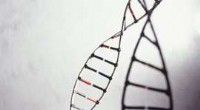
Genes are specific stretches of DNA located on chromosomes, varying dramatically in size. When visualized as a flattened double helix, the structure resembles a ladder, with each rung composed of a pair of nucleotides.
The four nucleotide bases—adenine (A), thymine (T), guanine (G), and cytosine (C)—pair exclusively (A‑T and G‑C). These base pairs encode the genetic instructions that make each gene unique. A single human gene may span hundreds of base pairs to several million.
Although chromosomes are microscopic during most of the cell cycle, each human chromosome contains roughly 20,000–25,000 genes. Remarkably, all humans share more than 99 % of their genes, meaning the less than 1 % that differs accounts for individual variation.
Gregor Mendel, an Austrian monk and botanist of the 19th century, is revered as the “father of genetics.” By cross‑breeding pea plants with distinct traits—such as yellow versus green seeds—he observed consistent patterns of inheritance that led him to formulate the concepts of dominant and recessive alleles.
Mendel noted that when yellow‑seeded plants were crossed with green‑seeded ones, the first generation (F1) displayed only yellow seeds. Subsequent self‑crossing of the F1 generation produced a 3:1 ratio (75 % yellow, 25 % green) in the second generation (F2), revealing a predictable genetic ratio.
Mendel’s work suggested that an organism with two identical alleles (homozygous) or two different alleles (heterozygous) for a gene will express the trait associated with the dominant allele. Recessive traits only become apparent when both alleles are recessive.
For example, a plant with two yellow alleles (YY) or one yellow and one green allele (Yy) will show yellow seeds, while a plant with two green alleles (yy) will display green seeds.
Punnett squares are a visual tool that helps illustrate how alleles combine during reproduction. While they clearly demonstrate dominant‑recessive patterns, more complex scenarios exist, such as incomplete dominance—where neither allele is fully dominant, resulting in a blended phenotype (e.g., pink snapdragon petals from red/white alleles)—and co‑dominance, where both alleles are expressed simultaneously (e.g., AB blood type).
Human recessive traits often involve reduced or lost function. Common examples include:
| Dominant Traits | Recessive Traits |
|---|---|
| Ability to roll the tongue | Lacking ability to roll the tongue |
| Unattached earlobes | Attached earlobes |
| Dimples | No dimples |
| Huntington’s disease | Cystic fibrosis |
| Curly hair | Straight hair |
| AB blood type | O blood type |
| Dwarfism | Normal growth |
| Baldness in males | No baldness in males |
| Hazel and/or green eyes | Blue and/or grey eyes |
| Widow’s peak hairline | Straight hairline |
| Cleft chin | Normal/smooth chin |
| High blood pressure | Normal blood pressure |
Recessive phenotypes can sometimes be more prevalent than dominant ones, influenced by genetic background and environmental factors. In highly homogeneous populations, such as certain Scandinavian groups, the frequency of recessive traits remains stable because most individuals carry the same allele combinations.