Westend61/Westend61/GettyImages
Glycolysis is the foundational biochemical pathway that converts the six‑carbon sugar glucose into energy‑rich molecules in virtually every living cell. Across the tree of life—from single‑cell bacteria to the largest marine mammals—cells rely on this process to extract usable energy from glucose.
In eukaryotes (animals, plants, protists, fungi), glycolysis is the first of three stages of cellular respiration. In prokaryotes (bacteria and archaea), it is the sole pathway for glucose oxidation because their cells lack the organelles needed for complete aerobic respiration.
The overall reaction is:
C6H12O6 + 2 NAD+ + 2 ADP + 2 Pi → 2 CH3(C=O)COOH + 2 ATP + 2 NADH + 4 H+ + 2 H2O
This equation shows that one molecule of glucose, two molecules of the oxidized electron carrier NAD+, adenosine diphosphate (ADP), and inorganic phosphate (Pi) are transformed into two molecules of pyruvate, two ATP, two reduced NADH, protons, and water. Notably, oxygen is absent, underscoring that glycolysis can occur anaerobically.
Glucose is a monosaccharide—an indivisible sugar with the formula CnH2nOn. It circulates in blood, is stored as glycogen in liver and muscle tissues, and is mobilized during high‑intensity exercise. Athletes use carbohydrate loading to maximize glycogen stores in specific muscle groups, improving endurance and performance.
Adenosine triphosphate (ATP) is the universal energy currency of life. The goal of glucose metabolism is to synthesize ATP by harnessing the chemical energy released when glucose bonds are cleaved. During moderate exercise, the body preferentially oxidizes glucose because it yields more ATP per molecule than fatty acids.
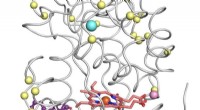
Enzymes—highly specific protein catalysts—drive the ten reactions of glycolysis. Each enzyme, named for its substrate and ending in “‑ase,” ensures rapid, regulated conversion of intermediates. For example, phosphoglucose isomerase converts glucose‑6‑phosphate to fructose‑6‑phosphate.
Glucose enters the cell and is phosphorylated to glucose‑6‑phosphate, trapping it inside. It is then isomerized to fructose‑6‑phosphate and phosphorylated again to fructose‑1,6‑bisphosphate. These two ATP‑consuming steps constitute the “investment” phase, costing 2 ATP per glucose molecule.
Fructose‑1,6‑bisphosphate is cleaved into two three‑carbon fragments: dihydroxyacetone phosphate (DHAP) and glyceraldehyde‑3‑phosphate (G3P). DHAP rapidly converts to G3P, so from here each reaction occurs twice per glucose.
G3P is oxidized to 1,3‑diphosphoglycerate, transferring electrons to NAD+ to form NADH. Subsequent substrate‑level phosphorylation generates four ATP (two per G3P). After accounting for the initial 2 ATP investment, the net yield is 2 ATP per glucose.
Intermediate products progress through 3‑phosphoglycerate, 2‑phosphoglycerate, phosphoenolpyruvate, and finally pyruvate.
In eukaryotes, pyruvate enters mitochondria under aerobic conditions to fuel the Krebs cycle and electron transport chain, producing additional ATP. Under hypoxic or high‑intensity conditions, pyruvate is reduced to lactate via lactate dehydrogenase, regenerating NAD+ and allowing glycolysis to continue—a process known as lactic acid fermentation.
Aerobic respiration comprises the Krebs cycle (citric acid cycle) and the electron transport chain (ETC). The ETC, located on the inner mitochondrial membrane, drives oxidative phosphorylation, generating the majority of ATP.
The net reaction of complete cellular respiration is:
C6H12O6 + 6 O2 → 6 CO2 + 6 H2O + 38 ATP
Of the 38 ATP, 2 come from glycolysis, 2 from the Krebs cycle, and 34 from the ETC.