Jupiterimages/liquidlibrary/Getty Images
Mitosis is a cornerstone of the cell cycle, driving the formation of diverse tissues that compose an organism. Every life‑science student will encounter this topic.
In this guide we’ll clarify what mitosis is, walk through its four stages, and highlight the concepts that frequently appear on exams.
The cell cycle is divided into interphase (G1, S, G2) and the mitotic phase. Interphase prepares the cell: G1 for growth, S for DNA replication, G2 for synthesis of mitotic proteins.
At each transition—G1, S, G2, and M—a checkpoint ensures the cell’s integrity. If errors are detected, the cell may pause or undergo apoptosis.
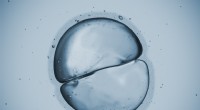
Mitosis is the division of a somatic cell into two genetically identical daughter cells. The four classic stages—prophase, metaphase, anaphase, telophase—are often remembered by the acronym PMAT.
During prophase, the nuclear envelope dissolves and the mitotic spindle begins to assemble. Some texts introduce a brief prometaphase, when chromosomes attach to spindle fibers.
Metaphase aligns the duplicated chromosomes along the spindle’s equatorial plane. In anaphase, sister chromatids separate and are pulled toward opposite poles. Telophase marks the re‑formation of nuclear membranes and the final separation of the cytoplasm.
A common test question asks how telophase differs between plant and animal cells. Both species form a cleavage furrow (animals) or a cell plate (plants) to complete cytokinesis.
Animals pinch the membrane inward, creating two distinct cells. Plant cells, constrained by a rigid cell wall, build a new internal wall that fuses to split the parent cell.
Chromosomes are long DNA strands folded into compact, finger‑shaped structures. After DNA replication in S phase, each chromosome consists of two sister chromatids joined at a centromere.
During anaphase, the spindle pulls chromatids apart; each becomes an independent chromosome in a daughter cell. Thus, the term "chromatid" applies only while the two DNA strands remain connected.