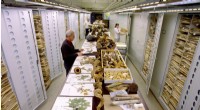
In the 19th century, taxonomy—the classification of living organisms—was a central focus of biology. While naturalists were busy cataloguing beetles and other macroscopic species, microorganisms were largely overlooked. Since then, advances in microscopy, molecular biology, and genomics have dramatically expanded our understanding of microbial life and refined the ways we classify it.
Modern taxonomy relies on three core pillars:
The taxonomic hierarchy ranges from the broadest rank, the domain, down to the most specific, the species. The sequence is: domain, kingdom, phylum, class, order, family, genus, species. For instance, the human lineage is Eukarya > Animalia > Chordata > Mammalia > Primates > Hominidae > Homo > sapiens.
Microorganisms are defined by their small size rather than any particular structure or function. They span all three domains of life: Bacteria, Archaea, and Eukarya. Both Bacteria and Archaea comprise exclusively single‑cell, prokaryotic organisms lacking a nuclear membrane. Consequently, every kingdom, phylum, class, order, family, genus, and species within these domains is a microorganism.
Within the Eukarya domain, the kingdom Protista is reserved for unicellular organisms that possess a true nucleus. Protists are grouped into three major phyla: algae (four phyla), protozoa (four phyla), and molds (two phyla). Each protist is a microscopic eukaryote, though many eukaryotes—such as trees and humans—are multicellular and not considered protists.
The kingdom Fungi, also within Eukarya, includes several microbial phyla. For example, Zygomycota contains microscopic bread molds, while Ascomycota includes yeasts, plant pathogens, and parasites. Lichens illustrate the complex relationships that can arise, as they are symbiotic assemblies of a fungus and a photosynthetic partner—often spanning multiple kingdoms or even domains.