By Kevin Beck Updated Aug 30, 2022
Stocktrek Images/Stocktrek Images/GettyImages
The cell membrane, also called the plasma or cytoplasmic membrane, is a fundamental structure that defines the boundary of every cell. It is a selectively permeable, self‑assembling lipid bilayer that controls the movement of ions, nutrients, and waste products, thereby maintaining the cell’s internal equilibrium.
All life forms possess a membrane, though its complexity varies. Prokaryotic cells—most commonly bacteria—feature a membrane that may be reinforced by a cell wall, whereas eukaryotic cells, which include plants and animals, lack a rigid wall and instead rely on membrane‑bound organelles such as the nucleus and mitochondria. Comparative studies suggest that eukaryotes evolved from prokaryotic ancestors, shedding the cell wall to gain greater structural flexibility and the capacity to grow up to ten times larger than their prokaryotic counterparts.
At the heart of the membrane lies the phospholipid bilayer, a fluid mosaic of glycerophospholipids that orient their hydrophilic head groups toward aqueous environments and their hydrophobic tails toward the membrane interior. Lipids constitute roughly half of the membrane’s mass, while the remaining half is composed of diverse proteins. In animal cells, cholesterol accounts for about 20 % of the lipid fraction, conferring rigidity and fluidity; plant membranes lack cholesterol but contain analogous sterols.
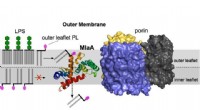
Membrane proteins are categorized by function: channel proteins facilitate passive transport; carrier proteins shuttle specific molecules; receptors detect extracellular signals; enzymes catalyze reactions at the membrane surface; and glycoproteins, bearing carbohydrate chains, play roles in cell‑cell recognition and signaling.
The cell membrane’s primary role is selective permeability. It permits essential small molecules—such as oxygen (O₂), carbon dioxide (CO₂), and water (H₂O)—to diffuse freely, while tightly regulating the passage of larger, charged, or polar substances. This selective barrier protects the cell from harmful toxins and maintains homeostasis.
Phospholipids self‑assemble in aqueous solutions due to their amphipathic nature; no external energy is required for bilayer formation. The hydrophobic core, formed by fatty acid chains, provides a nonpolar interior that resists passage of polar molecules, while the hydrophilic head groups interact with the surrounding water, stabilizing the structure.
Cells employ several strategies to move substances across the membrane:
These mechanisms enable cells to regulate ion balances, nutrient uptake, waste removal, and signal transduction, underpinning virtually all cellular processes.