Today it is a foundational truth that DNA carries hereditary information. Yet, in the 19th century, the mechanism of inheritance was a mystery.
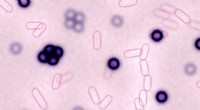
English bacteriologist Fred Griffith infected mice with two strains of Streptococcus pneumoniae: the virulent IIIS and the harmless IIR. When heat‑killed IIIS bacteria were mixed with living IIR bacteria, the mice succumbed, revealing that some "transforming principle" had transferred lethal properties.
Avery and colleagues fractionated the heat‑killed IIIS cells into proteins, RNA, and DNA, then treated each fraction with enzymes that selectively degraded one component. Only when DNA was removed did the IIR bacteria fail to acquire virulence, demonstrating that genetic information resided in DNA.
Alfred Hershey and Martha Chase used bacteriophage T2, labeling its proteins with radioactive sulfur and its DNA with radioactive phosphorus. After infecting E. coli, only the phosphorus label entered the new phage particles, confirming DNA as the genetic material.
Building on X‑ray diffraction data from Rosalind Franklin and Maurice Wilkins, James Watson and Francis Crick modeled DNA as a right‑handed double helix, with complementary base pairs linking two sugar‑phosphate backbones.
This sequence of experiments—starting with Griffith and culminating in Watson & Crick—transformed biology from speculation to molecular precision.