By Allia Nelson – Updated Aug 30, 2022
A phylogenetic tree visually maps the evolutionary pathways that link organisms to their common ancestors. While morphology once guided these diagrams, modern trees rely on DNA sequence comparisons, offering a precise, data‑driven view of relatedness.
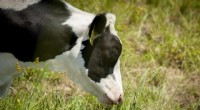
Select a species, breed, or representative nucleotide sequence that will serve as the reference point for the tree. For example, a cow (Bos taurus) can be used to explore how closely related other mammals are based on genetic markers.
An outgroup is a distantly related organism that anchors the tree and provides a baseline for rooting the evolutionary branches. If the model is a cow, a suitable outgroup might be a fish such as Danio rerio. The farther the outgroup from the model, the lower the branching point on the tree, representing an older divergence.
Choose a set of traits or DNA motifs that will separate the organisms. Traits can be phenotypic—has four legs, gives live birth, grows hair—or genotypic, such as the presence of a specific nucleotide sequence (e.g., ATGGACACGGA). These characters become the criteria for splitting branches.
Group organisms that share each trait. For the character has four legs, cows, sheep, and deer form one branch, while fish branch separately. Visually, place the cow image in the upper corner, the fish in the opposite corner, and draw a V‑shaped line down to the base of the poster. Continue adding traits and branching until each organism occupies a unique twig.
Repeat the separation process with additional traits (e.g., has wool, has a fluffy tail) to increase resolution. Each new trait creates a new node, bringing the tree closer to a realistic representation of evolutionary relationships. Statistical support, such as bootstrap values, can be added using software like MEGA or PAUP* to quantify confidence in each branch.
Pick a set of organisms or sequences, define distinguishing traits or motifs, and iteratively split them into branches to reveal evolutionary relationships.
Phylogenetic placement is subject to debate and requires robust support. Mathematical models and statistical tests are essential to demonstrate the likelihood of evolutionary changes. Even with genetic data, uncertainties remain, so trees should be interpreted as hypotheses rather than definitive proofs.