Joe Mcnally/Getty Images
The earliest known human fossils were those of Neanderthals (Homo neanderthalensis), unearthed in the late 1840s. It was not until the 1990s and 2000s that genetic evidence confirmed that Neanderthals shared mitochondrial DNA with modern humans (Homo sapiens). In 2008, a breakthrough came when fossilized remains from the Denisova Cave in Siberia’s Altai mountains revealed a previously unknown hominin species—Denisovans. Subsequent DNA analyses demonstrated that Denisovans also interbred with our ancestors.
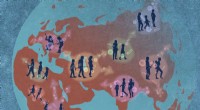
Supported by the European Research Council, Brown University Associate Professor of Ecology and Evolutionary Biology Emilia Huerta‑Sanchez and Trinity College Dublin Postdoctoral Research Fellow Dr. Linda Ongaro compared Denisovan and modern human genomes. Their study, published in Nature Genetics in November 2024, identified shared genetic signatures at three distinct points in early human history: roughly 46,000 years ago, 30,000 years ago, and possibly 15,000 years ago. These findings highlight a complex web of interactions between lineages.
Dr. Ongaro told Trinity College Dublin, “It’s a common misconception that humans evolved suddenly and neatly from one common ancestor. The more we learn, the more we realise that interbreeding with different hominins shaped the people we are today.”
Vladimir Voronkoff/Shutterstock
Neanderthals lived between 28,000 and 300,000 years ago, coexisting with Homo sapiens for extended periods before becoming extinct. Denisovans, known from a handful of fossils—a finger, a jawbone, skull fragments, and teeth—are estimated to have existed between 30,000 and 500,000 years ago. Genetic data indicate that Neanderthals and Denisovans diverged about 400,000 to 500,000 years ago, making them close cousins.
The Nature Genetics paper proposes that multiple Denisovan populations inhabited distant regions, including the Baishiya Karst Cave on China’s Tibetan Plateau. Adaptations to these varied environments—such as a genetic locus conferring tolerance to hypoxia (low oxygen), enhanced immune genes, and a gene influencing lipid metabolism for heat generation in cold climates—have been inherited by modern populations in those areas. Dr. Ongaro noted that future research on understudied groups and newly discovered Denisovan fossils will likely fill gaps in our understanding of this ancient species’ influence on contemporary humans.