Marina Demeshko/Getty Images
Microscopes have taught us that an entire universe exists beneath our skin, largely unseen by the naked eye. One of the most resilient organisms on Earth, the tardigrade, has survived for about 600 million years in environments no human has ever directly observed.
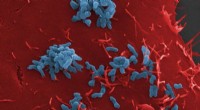
Even more intriguing—and often unsettling—is the fact that we host countless microscopic creatures on our bodies, including on our face. These microbes, ranging from bacteria to tiny arthropods, inhabit almost every surface we can imagine, even the inside of our eyes. The majority of them are beneficial, assisting digestion, preventing infections, and in the case of *Staphylococcus epidermidis*, helping maintain skin moisture and integrity.
Among the most well‑known of these skin dwellers are the Demodex mites, microscopic parasites that have lived with humans for millennia. While they feed on dead skin cells and sebum, they also play a role in keeping our skin clean and may even help protect against pathogenic bacteria.
Kalcutta/Shutterstock
We actually host more microbes than we have human cells, with a ratio of roughly 10:1. Across the body, there are more than 10,000 microbial species, and the skin alone supports around 1,000 distinct organisms. Most of these partners are allies, bolstering our immune defenses and supporting overall skin health.
Demodex folliculorum, one of the most common mites, lives in hair follicles and consumes shed skin cells, preventing buildup. While their presence may seem unnerving, most people experience no adverse effects. When their numbers grow out of proportion, a skin condition known as demodicosis can arise, causing itching, redness, and irritation.
According to the Cleveland Clinic, these mites favor facial areas such as cheeks, eyelashes, foreheads, the outer ear canals, and the sides of the nose. They spend most of the day within pores, but at night they emerge to mate and lay eggs. Routine washing does not remove them, but their diet of dead skin cells is actually beneficial for surface renewal.
wimala namket/Shutterstock
There are two main species: Demodex folliculorum, which resides in hair follicles, and Demodex brevis, which targets sebaceous glands. Both are microscopic, measuring 0.15–0.4 mm. Under magnification, these translucent arthropods appear as segmented bodies with eight legs and a tapered tail, making them some of the smallest insects on the planet.
While they are often referred to as parasites, their impact on human health is generally mild. Excessive populations can trigger demodicosis, but otherwise they coexist peacefully with us.
Kalcutta/Shutterstock
A study in the Indian Journal of Dermatology notes that, although these mites prefer facial skin, they have been found on the penis, mons veneris, buttocks, and even within the buccal mucosa (inside the mouth). The mites possess a genital opening; after mating, females produce larvae that hatch in 3–4 days, maturing into adults in about a week. Their entire life cycle spans several weeks, after which they die and decompose within follicles and glands, yet new generations continue the cycle.
Kitthanes/Shutterstock
Research published in the Indian Journal of Dermatology highlights that Demodex mites produce immune‑reactive lipase, an enzyme that can inhibit pathogenic bacteria such as *Staphylococcus aureus* and *Streptococcus pyogenes*. A 2022 paper in Molecular Biology and Evolution suggested that Demodex folliculorum represents a transition from a harmful parasite to an obligate symbiont, indicating a mutualistic relationship between us and these microscopic allies.
So, while it may be unsettling to think of mites crawling across your face, they are, in fact, part of a balanced ecosystem that supports skin health. Understanding their role helps demystify these tiny inhabitants and underscores the intricate connections between humans and the microscopic world.