Velvetfish/Getty Images
It kills its prey with a single punch, can see ultraviolet light, dates back to pre‑dinosaur times, and measures only 1–7 inches. This is the peacock mantis shrimp, a small but awe‑inspiring marvel of marine biology.
Technically, mantis shrimp aren’t true shrimp. They belong to the order Stomatopoda, a group of highly specialized crustaceans closely related to lobsters, crabs, and true shrimp. With over 400 species, they inhabit the warm, shallow waters of the Indian and Pacific Oceans, thriving around coral reefs. The peacock mantis shrimp is the most iconic species, celebrated for its iridescent colors that captivate photographers and researchers alike.
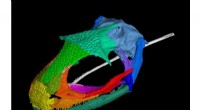
Mantis shrimp keep their forearms tucked beneath the body, compressing the muscles to store potential energy. When released, the claws accelerate at 75 ft/s—roughly 23 m/s—striking the target in one‑fiftieth of a blink. This force is comparable to a .22‑caliber bullet.
The speed of the strike creates cavitation bubbles—tiny pockets of vapor that collapse almost instantaneously, producing shock waves that amplify the impact. The energy released is so intense that a brief flash of light accompanies the blow.
Smashers such as the peacock mantis shrimp generate 1,500 N of force while weighing just 1.5 lb, making them feather‑weight champions. Their punches can shatter aquarium glass and, scaled to human body mass, would break steel walls. This extraordinary power enables them to crack the hard shells of crabs, clams, and other crustaceans, delivering lethal blows in a single strike.
Beyond its blistering strike, the mantis shrimp possesses an array of superhuman traits. Its vision is unrivaled: it has the most complex eyes in the animal kingdom. While its compound eyes resemble those of insects, each eye comprises three stacked segments—effectively three eyes in one—allowing depth perception with just one eye. The stalked eyes can swivel independently, providing nearly 360° coverage.
Mantis shrimp see a spectrum far beyond human perception. With 12 photoreceptor types versus humans’ three, they perceive ultraviolet light and other electromagnetic wavelengths invisible to us. Remarkably, they can detect subtle differences in light reflected by cancerous cells, a capability that has inspired researchers to develop imaging technologies based on their visual system.
These crustaceans are fiercely territorial. When a threat enters their domain, they strike to defend themselves—sometimes even against humans. A study in The Journal of the Brazilian Society of Tropical Medicine collected interviews from fishermen who encountered mantis shrimp while navigating shallow waters or retrieving nets. Five participants reported lacerations from a mantis shrimp’s blow, with pain lasting days.
Viral footage of encounters—such as a kayaker who was struck while attempting to release a shrimp—demonstrates the danger. The animal punched through a rubber boot, drawing blood. These stories underscore that, despite their beauty, mantis shrimp are not to be trifled with.