viktor95/Shutterstock
The Chernobyl disaster, which unfolded on April 26, 1986, remains one of the most infamous nuclear catastrophes in history. During a routine maintenance test at the Chernobyl Power Plant—a boiling‑water reactor in northern Ukraine—a sudden explosion released a vast plume of radioactive material into the surrounding environment. The immediate aftermath claimed two lives at the plant and, within three months, 28 more, primarily due to acute radiation sickness. In a decisive effort to protect future generations, the damaged reactor was encased in concrete, the nearby town of Pripyat was evacuated, and an exclusion zone spanning roughly 20 miles was declared off‑limits.
Today, the Chernobyl Exclusion Zone (CEZ) remains one of the world’s most radioactive areas. The 1986 incident released more than 100 different radioactive isotopes; while many have decayed, long‑lived contaminants such as cesium‑137 persist in high concentrations. Conventional wisdom might suggest that such an environment would be a barren wasteland, yet the reality is far more intriguing.
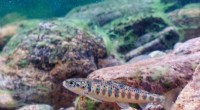
With human presence largely removed, the CEZ has inadvertently become Europe’s third‑largest nature reserve. It now supports a surprisingly diverse array of fauna—including insects, amphibians, fish, mammals, and over 200 bird species. While wildlife populations have rebounded, scientists are probing how chronic radiation exposure may be influencing evolution and genetic diversity within these species.
Sergiy Romanyuk/Getty Images
Darwin’s theory of natural selection posits that individuals possessing advantageous genetic mutations are more likely to survive and reproduce. In the context of the CEZ’s high radiation levels, certain traits appear to confer a selective advantage. A 2022 study of Eastern tree frogs (Hyla orientalis) compared populations inside and outside the CEZ, revealing a gradient of melanin concentration that correlated with proximity to the reactor. Darker skin provides enhanced protection against ionizing radiation, and the study found that frogs with higher melanin levels had greater survival rates in the most contaminated zones.
One of the most emblematic residents of the zone are the feral dogs that remained after Pripyat’s evacuation. When residents could only take what they could carry, many pets were abandoned. Decades later, researchers have identified distinct genetic signatures in the CEZ dog population. Two 2023 investigations—one published in Science Advances and the other in Canine Medicine and Genetics—demonstrated that these dogs differ genetically from their non‑exposed counterparts. Notably, the studies also reported an elevated incidence of cataracts linked to radiation‑induced genetic changes. The long‑term health consequences for these animals remain an active area of research.
These findings illustrate how radiation can act as a selective force, reshaping the genetic landscape of organisms that survive in contaminated environments. While the CEZ’s wildlife has adapted in remarkable ways, the full evolutionary legacy of the disaster is still unfolding, and additional species studies will be essential to understand the broader implications for biodiversity and evolutionary biology.