Danny Ye/Shutterstock
In 2005, scientists in India unearthed fossilized remains of a snake that was longer than a city bus and potentially weighed as much as 2,200 pounds. Although the creature lived some 47 million years ago, it remains the largest snake ever recorded. Today’s snakes may not be bus‑sized, but several species still reach remarkable sizes.
When ranking the world’s largest snakes, the answer varies between length and weight, and even the cited measurements are sometimes hard to verify. The reticulated python (Python reticulatus) can exceed 20 feet in length, making it the longest snake known. However, bulk is the decisive factor for overall weight, and that title belongs to the green anaconda.
Green anacondas can grow beyond 29 feet and are estimated to weigh over 550 pounds— but recent research has shown that what was once considered a single species actually comprises two distinct taxa. The newly identified northern green anaconda (Eunectes akayima) is now recognized as the heaviest snake in existence, surpassing even the most massive football players.
Historically, the anaconda complex was thought to include four species: yellow (Eunectes notaeus), Bolivian (Eunectes beniensis), dark‑spotted (Eunectes deschauenseei), and green (Eunectes murinus). Green anacondas thrive in tropical swamps, marshes, and rivers, evolving eye and nostril placement that enables them to lie motionless in water while awaiting prey. Although non‑venomous, they are powerful constrictors that rely on sheer mass to subdue their meals.
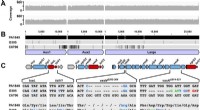
Professor Bryan Fry of the University of Queensland led a comprehensive genetic survey of anaconda samples collected across nine countries. After nearly two decades of work, the team published their findings in the journal Diversity, revealing that the green anaconda is actually split into two genetically distinct species that differ by 5.5 %— a greater divergence than that between humans and chimpanzees. One of these, the northern green anaconda, now holds the record for the world’s heaviest snake.
During filming for National Geographic’s series "Pole to Pole," Fry and colleagues encountered Ana Julia, a 26‑foot green anaconda found in Brazil’s Formoso River near Bonito. Weighing approximately 440 pounds, Ana Julia’s head alone was roughly the size of a human head.
Belonging to the newly‑classified northern green anaconda, Ana Julia represented the largest specimen ever documented in living history. Unfortunately, the snake was found dead weeks after its discovery, and the cause of death remains unclear, though some reports suggest it may have been shot.
Fry has highlighted that anecdotal accounts from the Waorani people describe anacondas measuring over 7.5 meters (25 feet) and weighing around 500 kilograms (1,102 pounds). If verified, such individuals would eclipse Ana Julia as the heaviest modern snake. While locating these giants is challenging due to their aquatic habits, the northern green anaconda’s status as the heaviest snake species is now firmly established.