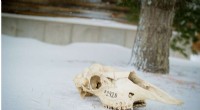
In a groundbreaking announcement, Colossal Biosciences revealed that it had revived the dire wolf, a species that vanished over 12,500 years ago. By editing 20 sites in the gray wolf genome to match DNA extracted from dire wolf fossils, the company produced three pups—Romulus, Remus, and Khaleesi—through surrogate dog pregnancies. While the pups share key traits—white fur, powerful jaws, and a larger build—they are not 100% genetically identical to the extinct species, a fact acknowledged by the team.
These “dire wolves” currently reside in a controlled preserve, yet Colossal has hinted at potential future releases into the wild. Such a move would carry significant ecological risk, especially given the unresolved question of what led to the original extinction of the species.
Human-driven extinctions are well documented for species like the dodo and the bison, but dire wolves predate written history, making direct evidence scarce. While early humans might have hunted megafauna such as mastodons and mammoths, it is unlikely they targeted dire wolves, which posed a greater danger. More plausible human impacts include disease transmission and competition for shared prey. If early humans outcompeted dire wolves for large ungulates—already stressed by environmental shifts—this could have hastened the species’ decline.
The Younger Dryas Impact Hypothesis (YDIH) proposes that a comet or meteor fragment shattered over North America around 12,900 years ago, triggering rapid cooling and a cascade of extinctions, including the dire wolf. However, this theory remains fringe; subsequent studies have failed to confirm the evidence cited in the original 2007 PNAS paper, and recent reviews in 2024 have further disputed its validity.
The most widely accepted explanation attributes dire wolf extinction to climatic fluctuations during the late Pleistocene. Sudden temperature swings, even before the Younger Dryas, dramatically reduced populations of large herbivores—horses, bison, and possibly mammoths—that dire wolves specialized in hunting. As these prey species declined, dire wolves faced starvation. Human hunters, targeting the same megafauna, likely accelerated the loss of critical food sources, sealing the dire wolf’s fate.