Jesus Cobaleda/Shutterstock
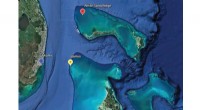
Just off the coast of Vangunu Island in the Solomon Islands lies Kavachi, an active submarine volcano whose summit sits 66 feet below sea level. The crater erupts ash and molten rock every few years in violent blasts that resemble a nuclear detonation on the water’s surface. It’s a place where life would seem improbable—until a 2015 National Geographic expedition uncovered a surprising community of sharks.
Ocean engineer Brennan Phillips led a team that deployed underwater cameras into Kavachi’s crater to study its hydrothermal activity. The footage revealed a murky habitat teeming with scalloped hammerheads and silky sharks, as well as stingrays, snapper, and jellyfish. These species typically thrive in temperate waters around 70 °F, raising the question: how do they survive in one of Earth’s most hostile environments?
Mutations are often portrayed as grotesque anomalies in fiction, yet in reality they are the engine of evolution. Beneficial genetic changes can enable species to colonize new niches and thrive under extreme conditions. The sharks at Kavachi likely possess mutations that confer tolerance to high temperatures and acidity, allowing them to persist where most would perish.
Kavachi is one of the most active underwater volcanoes in the Pacific, erupting every few years; its most recent blast occurred in 2024. The volcano’s name derives from the Vangunu sea deity, and locals refer to it as “Rejo te Kavachi,” meaning “Kavachi’s oven,” a nod to its relentless volcanic activity.
The crater’s water is not only scalding but also highly acidic due to CO₂ released by the volcano. Ocean acidification is a key factor in climate change, and a 2014 study published in Biology Letters showed that CO₂‑induced acidification can alter shark behavior, including reduced sleep patterns. (Biology Letters, 2014) Further research is essential to understand how these sharks adapt, though the volcano’s frequent eruptions make such studies challenging.