FOTOGRIN/Shutterstock
In the microbial world, the smallest organisms often exhibit the greatest resilience. While tardigrades earn praise for their indomitable nature, the bacterium Deinococcus radiodurans stands out as the ultimate survivor of radiation and harsh environments.
Known as the world’s most radioresistant organism, D. radiodurans can endure a staggering 1.5 million rads of gamma radiation—roughly 3,000 times the dose that would prove lethal to a human in a matter of hours. Beyond radiation, it withstands ultraviolet light, oxidative stress, and desiccation, making it a versatile model of extremophily.
luchschenF/Shutterstock
Discovered in the 1950s inside canned meat that had been exposed to ionizing radiation, this tiny single‑cell organism surprised scientists with its remarkable survival. Its formal name, Deinococcus radiodurans, reflects both its black pigment and its radiation endurance. Compared to the common bacterium Escherichia coli, it is 30 times more resistant to ionizing radiation and over a thousand times more tolerant than humans.
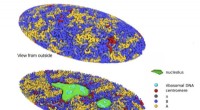
Research has traced this resilience to a combination of structural and biochemical strategies: a robust cell wall, a compact and well‑protected genome, efficient DNA repair pathways, and a potent antioxidant system. Each component contributes to its survival, but recent studies reveal an even more fascinating synergy.
Nisian Hughes/Getty Images
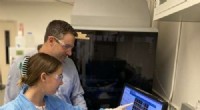
A 2024 study published in the Proceedings of the National Academy of Sciences identified a unique antioxidant complex in D. radiodurans composed of manganese ions, phosphate, and peptides. Together, these molecules form a defensive shield that surpasses the protective effects of each individual component—a classic example of “greater than the sum of its parts.”
Understanding this natural defense opens the door to innovative applications. Synthetic antioxidants inspired by the bacterium could enhance human protection against radiation—critical for space missions, especially those targeting Mars, where exposure to high levels of cosmic radiation is a major challenge. The insights gained may also inform medical treatments that mitigate radiation damage in cancer therapy and accidental exposure scenarios.