In 1871 a farmer from Réunion, a French island off Madagascar, relocated his family and a handful of cattle to the remote Amsterdam Island—located roughly equidistant between Africa, Australia, and Antarctica—in an attempt to establish a new livelihood. Within a year the expedition returned to Réunion, leaving the cows behind. Though the mission was largely forgotten by history, the herd it left in place continues to intrigue scientists.
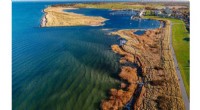
Amsterdam Island is a volcanic outcrop in the southern Indian Ocean, offering few resources for sustaining livestock. The early settlers abandoned the cows, but the animals managed to thrive, establishing one of the world’s few feral cattle populations. At their zenith the herd numbered around 2,000 individuals, with researchers culling approximately 50 per year for sustenance and population control.
While the herd’s genetic diversity made it valuable for research—especially in genetics—its presence posed a serious ecological threat. The cows’ grazing devastated native plant communities and disrupted the island’s fragile ecosystem. In response, the French government erected an electrified barbed‑wire fence to confine the herd to the northern half of the island and systematically culled those south of the barrier. The program proved successful, leading to a complete cull of the remaining cows in 2010.
Feral cattle are a rarity worldwide, limiting opportunities to study the process of feralization in ungulates. Remarkably, a 2019 study published in Molecular Biology and Evolution revealed that the Amsterdam Island herd displayed greater genetic diversity than contemporary European domestic breeds, despite originating from only five founders less than a century ago.
Researchers attribute this success to the cows’ pre‑feral heritage. The founding stock was largely of European descent, closely related to the Jersey breed from Great Britain. Their relatively small stature and adaptation to cold, wet climates gave them an evolutionary advantage in Amsterdam Island’s subpolar environment.
Although the Amsterdam Island herd has been eradicated, other feral cattle populations offer continued insight. In the Chernobyl Exclusion Zone, feral cows are monitored as analogs for the extinct aurochs, while on Alaska’s Chirikof Island the herd is protected as a genetic safeguard against potential disease outbreaks. These remaining populations underscore the importance of preserving feral cattle for both ecological and evolutionary research.
The legacy of Amsterdam Island’s feral cows illustrates how a single, abandoned expedition can leave an enduring scientific footprint. By studying their genetic diversity, ecological impact, and adaptive strategies, researchers gain a deeper understanding of evolution, invasive species management, and conservation genetics.