Majid Saeedi/Getty Images
Beyond the immediate loss of life and infrastructure, the March 7–8, 2026 U.S.–Israeli airstrikes on 30 Iranian oil depots have unleashed prolonged environmental harm. The World Health Organization warned of severe public‑health repercussions as flames persisted for days, releasing dense smoke that culminated in what witnesses described as “black rain” – rain contaminated with soot and hydrocarbons, causing burning eyes and sore throats.
The combustion of crude releases soot (partially burnt carbon) and polycyclic aromatic hydrocarbons, both of which can be carried by rain droplets. Additionally, the fires emit sulfur dioxide and nitrogen oxides, which combine with water vapor and oxygen to form nitric and sulfuric acids, producing acid rain that lowers the pH of precipitation and disrupts local ecosystems.
Acid rain can leach nutrients from soil and acidify surface waters, impairing plant growth and marine life, and ultimately cascading down the food chain.
Majid Saeedi/Getty Images
The long‑term ecological footprint of these strikes remains to be fully quantified, yet war is widely recognized as a catalyst for environmental degradation. Real‑time monitoring is hampered by restricted internet access, satellite latency, and an escalating number of incidents. Although research is limited, explosive weaponry can contaminate water sources; oil released during the attacks has already entered Tehran’s storm drainage, posing a risk of seeping into natural water bodies and surrounding soils.
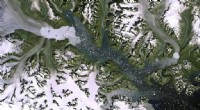
Black carbon emitted by the burning oil accelerates climate change by absorbing solar radiation. Similar to the Gulf War’s oil fires in Kuwait, these particles can travel vast distances—modeling suggests soot may reach Siberia’s glaciers, where it reduces albedo and accelerates melting.
Svphilon/Getty Images
Water‑quality reports from Tehran reveal contamination with potentially carcinogenic pollutants, amplifying a pre‑existing water‑scarcity crisis driven by drought. The airstrikes are poised to exacerbate limited access to clean drinking water.
Smoke laden with fine particulate matter, black carbon, and other toxic substances increases cardiovascular and respiratory illnesses, raises lung‑cancer risk, and can cause systemic and neurological damage. Children, the elderly, and individuals with pre‑existing respiratory conditions are particularly vulnerable.
While masks and indoor sheltering can mitigate exposure, such measures may be impractical during active conflict. The intersection of environmental degradation and human health highlights the urgent need for comprehensive monitoring and mitigation strategies.