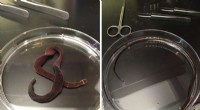
Ascaris lumbricoides is a large, pale white or pink roundworm that can reach up to 12 inches (31 cm) in length. Females are typically larger than males and can produce hundreds of thousands of eggs each day. The worm has a cylindrical body, tapered at both ends, and lacks a distinct head, eyes, or attachment structures such as hooks or suckers. Instead, it lives freely in the intestines and absorbs nutrients directly through its skin.
The primary human pathogen is A. lumbricoides, while its close relative, Ascaris suum, mainly infects pigs. The two species share similar morphology and life cycles, and occasional cross‑infection between humans and pigs has been documented. Researchers often use A. suum as a model to study human ascariasis due to their comparable biology.
Unlike social animals, adult Ascaris worms live solitary lives within the host’s gut. However, their presence can have profound community‑wide effects, especially in regions with inadequate sanitation. In areas where human feces are used as fertilizer or where open defecation is common, the worms spread rapidly, leading to widespread infection and associated morbidity.
Ascaris lumbricoides lacks a digestive tract; it relies entirely on the host’s food. By absorbing nutrients through its cuticle, a heavy worm burden can cause malnutrition, particularly in children, and may contribute to growth stunting and anemia.
The parasite thrives in warm, humid climates where soil contamination is common. Eggs can persist in soil for months or even years, remaining infective until ingested by a new host. The majority of infections occur in tropical and subtropical regions of Africa, Asia, and Latin America.
Infection begins when fertilized eggs are shed in human feces and contaminate soil, water, or food. After ingestion, the eggs hatch in the small intestine, releasing larvae that travel through the bloodstream to the lungs. The larvae are coughed up, swallowed, and return to the intestines, where they mature into adult worms. Female worms then release eggs that exit the body, continuing the cycle.
Effective control hinges on improving sanitation, providing clean water, and promoting proper waste disposal. Deworming campaigns, especially in schools, have dramatically reduced infection rates in many endemic areas. Public health education about hygiene practices and the risks of open defecation is essential to break the transmission cycle.